



What Quarters Are Worth Money? The Complete Guide to Valuable U.S. Quarters
Most people toss quarters into a jar without a second thought. But some of those coins sitting in your
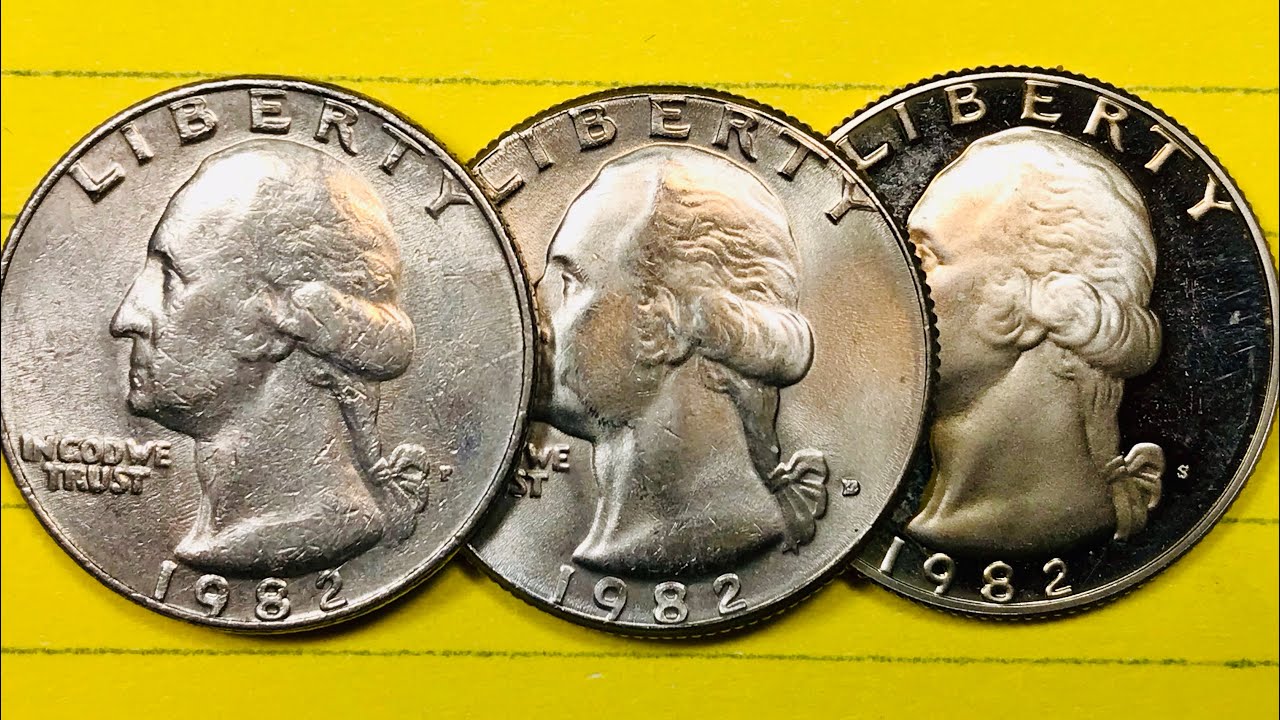
Most people toss quarters into a jar without a second thought. But some of those coins sitting in your pocket could be worth far more than 25 cents. Certain quarters depending on their year, mint mark, condition, and errors — can fetch anywhere from a few dollars to tens of thousands. This guide covers exactly what quarters are worth money, what years to look for, which state quarters are worth money, and how to identify rare quarters in your collection.
How to Know If a Quarter Is Worth Money
Before diving into specific years, here’s what determines a quarter’s value:
1. Year & Mint Mark
The year a coin was made and which mint produced it (Philadelphia, Denver, or San Francisco) directly affects rarity and value.
2. Condition (Grade)
Coins are graded from Poor (P-1) to Perfect Mint State (MS-70). The better the condition, the higher the value. Even a rare quarter in poor condition is worth far less than one in mint state.
3. Errors & Varieties
Minting errors — doubled dies, off-centre strikes, wrong planchets — can make an otherwise ordinary quarter extremely valuable.
4. Silver Content
Quarters made before 1965 contain 90% silver. Even worn silver quarters are worth more than face value based on silver content alone.
5. Demand Among Collectors
Some quarters are rare but not widely sought. High collector demand + low mintage = high value.
What Year Quarters Are Worth Money?
Here are the most valuable quarter years every collector and casual finder should know:
1796 Draped Bust Quarter
One of the oldest and rarest U.S. quarters ever minted. Only 6,146 were produced.
- Value: $5,000 – $300,000+ depending on condition
- What to look for: Small eagle on reverse, Liberty bust on obverse
1804 Draped Bust Quarter
Extremely low mintage of just 6,738 coins makes this one of the most sought-after early American quarters.
- Value: $3,000 – $150,000+
- What to look for: Similar to 1796 but with a different reverse design
1870-CC Quarter (Carson City Mint)
Carson City mint coins are always collectible. The 1870-CC had a very small mintage and few have survived.
- Value: $2,000 – $50,000+
- What to look for: “CC” mint mark on reverse
1916 Standing Liberty Quarter
The very first year of the Standing Liberty design. Extremely low mintage of only 52,000.
- Value: $1,000 – $20,000+
- What to look for: Lady Liberty standing, no date worn away
1932-D and 1932-S Washington Quarters
The first year of the Washington Quarter design. The Denver (D) and San Francisco (S) versions had very low mintages — 436,800 and 408,000 respectively.
- Value: $100 – $15,000+
- What to look for: “D” or “S” mint mark beneath the eagle on the reverse
1943-S Washington Quarter (Double Die)
A doubling error on this San Francisco issue makes it a standout rarity.
- Value: $500 – $5,000+
- What to look for: Doubling visible on “LIBERTY” or the date
1950-D/S Overmint Mark Quarter
A Denver mint mark was stamped over a San Francisco mark — a clear minting error.
- Value: $200 – $2,500+
- What to look for: Overlapping mint marks under magnification
Pre-1965 Silver Quarters (90% Silver)
Any Washington Quarter dated 1964 or earlier contains 90% silver. Even in average circulated condition, these are worth at least $4–$6 in silver melt value — and much more in high grades or rare varieties.
- Years: 1932–1964
- Value: $4 – $500+ (common dates); $1,000+ for key dates in mint state
- What to look for: No copper strip visible on the edge (unlike modern clad quarters)
1965 Silver Quarter Error
In 1965, the U.S. Mint switched from silver to clad (copper-nickel). A small number of 1965 quarters were accidentally struck on silver planchets.
- Value: $3,000 – $10,000+
- What to look for: Weigh it — silver planchet quarters weigh 6.25g vs 5.67g for clad
1970-S Proof Quarter on 1941 Canadian Quarter
One of the most bizarre error coins in U.S. history — struck on a Canadian quarter planchet.
- Value: $10,000 – $35,000+
- What to look for: Canadian design ghosted on reverse
Quarters Worth Money — Quick Value Reference Table
| Year & Type | Mint Mark | Est. Value (Circulated) | Est. Value (Uncirculated) |
|---|---|---|---|
| 1796 Draped Bust | None | $5,000+ | $200,000+ |
| 1804 Draped Bust | None | $3,000+ | $100,000+ |
| 1916 Standing Liberty | None | $1,000+ | $15,000+ |
| 1932-D Washington | D | $100+ | $10,000+ |
| 1932-S Washington | S | $100+ | $10,000+ |
| Pre-1965 Silver (common) | Any | $4–$10 | $20–$500+ |
| 1965 Silver Error | None | $3,000+ | $10,000+ |
| 2004-D Wisconsin Extra Leaf | D | $100–$300 | $500+ |
| 1999-S Connecticut Proof | S | $75–$200 | $400+ |
What State Quarters Are Worth Money?
The 50 State Quarters Program ran from 1999 to 2008. Most state quarters are worth face value — but a handful have errors or low mintages that make them genuinely valuable.
2004-D Wisconsin Quarter — Extra Leaf Error
This is the most famous and valuable state quarter error. Some Wisconsin quarters from the Denver mint show an extra leaf on the ear of corn on the reverse — either pointing up or pointing down.
- Value: $100 – $1,500 depending on variety and condition
- What to look for: An additional leaf on the lower left of the corn stalk
1999-P Delaware Quarter — Spitting Horse Error
A die crack on some Delaware quarters creates a line from the horse’s mouth, making it look like the horse is spitting.
- Value: $10 – $300+
- What to look for: A raised line from the horse’s mouth area
2005-P Minnesota Quarter — Extra Tree Error
Some Minnesota quarters have extra tree lines visible in the forest design due to a doubled die.
- Value: $50 – $300+
- What to look for: Additional tree outlines in the upper left of the design
2000-P South Carolina Quarter — Struck on Wrong Planchet
A few South Carolina quarters were accidentally struck on dime planchets, making them undersized.
- Value: $500 – $3,000+
- What to look for: Much smaller than a normal quarter; lighter weight
1999-S Proof State Quarters (Silver)
San Francisco produced silver proof versions of all state quarters. The 1999 Connecticut and Delaware proofs in silver are particularly sought after.
- Value: $50 – $400+ per coin in top grades
- What to look for: “S” mint mark, mirror-like proof finish, silver edge (no copper stripe)
2019-W West Point Quarters
In 2019, the U.S. Mint released quarters with a “W” mint mark from the West Point Mint — the first “W” quarters ever released into general circulation. Only 2 million of each design were made.
- Value: $5 – $75+ depending on design and condition
- What to look for: “W” mint mark above the year on the obverse
What Quarters Are Worth a Lot of Money? — The Top 5
If you’re looking for the absolute highest-value quarters ever sold:
1. 1796 Draped Bust Quarter — Up to $300,000+
2. 1804 Draped Bust Quarter — Up to $150,000+
3. 1970-S Proof on Canadian Planchet — Up to $35,000
4. 1916 Standing Liberty Quarter — Up to $25,000+
5. 1932-D Washington Quarter (MS-67) — Up to $20,000+
These are extreme cases — but even mid-range rare quarters in good condition can sell for hundreds.
How to Check If Your Quarter Is Worth Money
Step 1: Check the Date
Look at the year. Pre-1965? It’s silver. Key dates like 1932-D/S, 1916, or 1804? Research immediately.
Step 2: Find the Mint Mark
Look on the reverse (tails side) below the eagle, or on the obverse (heads side) near Washington’s portrait on modern coins. P = Philadelphia, D = Denver, S = San Francisco, W = West Point.
Step 3: Examine for Errors
Use a magnifying glass or loupe (10x). Look for doubling on letters or numbers, extra design elements, off-centre strikes, or unusual edges.
Step 4: Check the Edge
Silver quarters have a solid silver-grey edge. Clad quarters show a visible copper-orange stripe in the middle of the edge.
Step 5: Weigh It
A silver quarter weighs 6.25 grams. A clad quarter weighs 5.67 grams. A postal or kitchen scale works fine.
Step 6: Grade the Condition
Compare your coin to grading images online. Even a rare date in poor condition is worth far less. Uncirculated coins (no wear at all) command the highest premiums.
Step 7: Get It Professionally Graded
For anything potentially worth $100+, submit to PCGS (Professional Coin Grading Service) or NGC (Numismatic Guaranty Company). A graded, slabbed coin sells for significantly more.
Frequently Asked Questions
Q: What quarters are worth money right now?
Pre-1965 silver quarters, the 2004-D Wisconsin extra leaf error, the 1932-D and 1932-S Washington quarters, and the 2019-W quarters are all worth more than face value right now.
Q: How do I know if my quarter is silver?
Check the year — 1964 or earlier means 90% silver. Also check the edge: no copper stripe = silver. Weigh it: 6.25g = silver.
Q: Are state quarters worth collecting?
Most common state quarters are worth 25 cents. However, error varieties like the 2004-D Wisconsin extra leaf can be worth hundreds. Silver proof state quarters are also collectible.
Q: What is the rarest quarter ever made?
The 1796 Draped Bust Quarter is considered one of the rarest and most valuable, with only 6,146 ever produced.
Q: Where can I sell rare quarters?
You can sell through eBay, coin dealers, local coin shows, or auction houses like Heritage Auctions and Stack’s Bowers for high-value pieces.
Q: Do I need to clean my quarter before selling?
Never clean a coin. Cleaning removes the natural patina and drastically reduces value among collectors and graders.