




How to Change a Tire: 12 Simple Steps (2026 Guide)
Quick answer: To change a tire, pull over somewhere safe, turn on your hazard lights, and set the parking
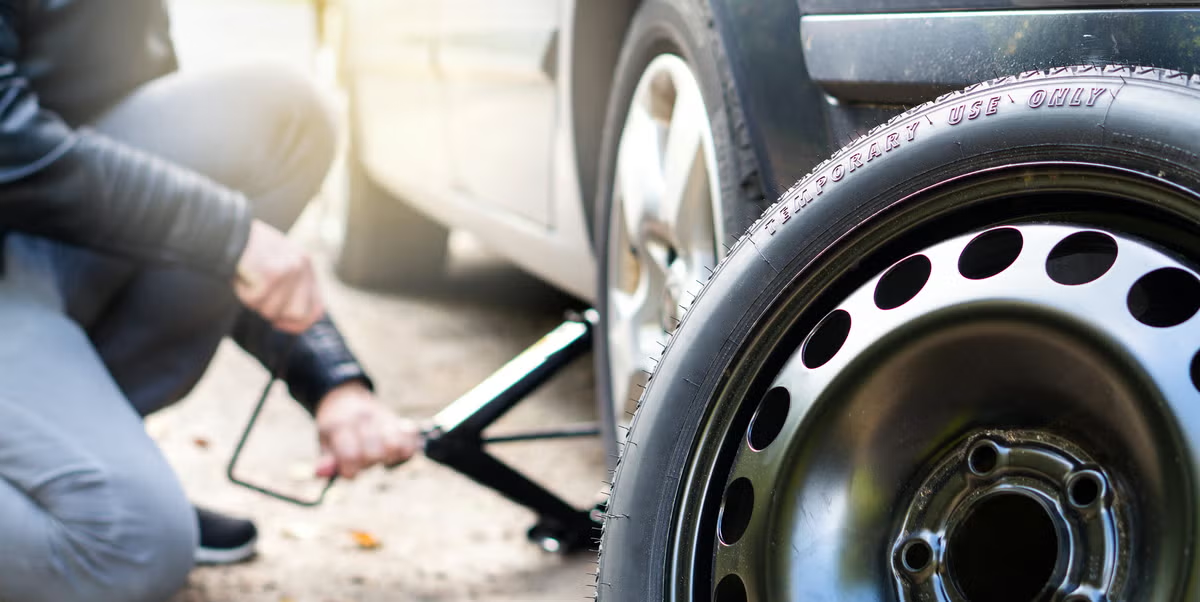
Quick answer: To change a tire, pull over somewhere safe, turn on your hazard lights, and set the parking brake. Loosen the lug nuts, raise the car with the jack, remove the flat tire, mount the spare, hand-tighten the lug nuts, lower the car, then fully tighten the nuts in a star pattern. For most drivers the whole job takes 15–30 minutes and needs just three tools: a jack, a lug wrench, and an inflated spare tire.
A flat tire always seems to happen at the worst time. The good news: changing one is a skill almost anyone can learn, and you don’t need to be a mechanic. This guide walks you through every step the safe way, shows you exactly which tools to grab, and answers the questions most other guides skip — like how far you can actually drive on that little donut spare, and what to do if your car didn’t come with a spare at all.
What you’ll need: the tire-changing toolkit
Most cars come with the basic tools already stored under the trunk floor or in the cargo area. Before you ever get a flat, open your trunk and confirm you have these:
| Tool | What it does | Already in your car? |
| Spare tire | The replacement wheel (full-size or compact “donut”) | Usually under the trunk floor |
| Car jack | Lifts the vehicle off the ground | Usually included |
| Lug wrench | Loosens and tightens the lug nuts | Usually included |
| Owner’s manual | Shows your jack points and spare location | In the glovebox |
| Wheel wedges / chocks | Block the tires so the car can’t roll | Often not included — add these |
| Gloves & flashlight | Keep hands clean; light for night changes | Add these |
| Tire pressure gauge | Confirms the spare is properly inflated | Add this |
| Wheel-lock key | Removes anti-theft lug nuts (if equipped) | Check your glovebox |
Tip: Check your spare tire’s air pressure every few months. A flat spare is useless in an emergency, and it’s the one tire people forget.
How to change a tire in 12 steps
1. Find a safe place to pull over
The moment you feel a flat or hear a blowout, slow down gradually and steer toward a flat, stable surface away from traffic — a parking lot, wide shoulder, or quiet side street. Avoid stopping on a curve, a hill, or soft ground. Never attempt a tire change in a live traffic lane; if you can’t reach a safe spot, drive slowly on the rim to safety rather than risk standing in traffic.
2. Turn on your hazard lights
Switch on your hazard (flasher) lights as soon as you realize you have a flat. They warn other drivers and stay on while you work.
3. Apply the parking brake and chock the wheels
Set the parking brake firmly. If you have wheel wedges or chocks, place them against the tires on the opposite end of the car from the flat — front wheels if you’re changing a rear tire, and vice versa. A brick or large rock works in a pinch.
4. Get out the spare and tools
Remove the spare tire, jack, and lug wrench. Lay them within reach near the flat. Check your owner’s manual now if you’re unsure where any of these are stored.
5. Remove the hubcap or wheel cover
If your wheel has a hubcap covering the lug nuts, pry it off with the flat end of the lug wrench. Some wheels expose the lug nuts directly — skip this step if so.
6. Loosen the lug nuts (but don’t remove them)
Turn each lug nut counterclockwise about a half-turn using the lug wrench. Do this while the car is still on the ground — the tire’s grip on the pavement keeps it from spinning. If a nut is stubborn, position the wrench so you can push down with your body weight or step on it. Don’t fully remove the nuts yet.
7. Place the jack and raise the car
Position the jack under the metal jack point nearest the flat tire — usually a reinforced notch along the frame, just behind the front wheels or ahead of the rear wheels. Your owner’s manual shows the exact spots. Raise the car until the flat tire is about 6 inches off the ground. Never put any part of your body under the vehicle while it’s on the jack.
8. Remove the lug nuts and the flat tire
Unscrew the loosened lug nuts the rest of the way by hand and set them somewhere they won’t roll away (an upturned hubcap is perfect). Grip the flat tire and pull it straight toward you off the wheel studs. Set it flat on the ground so it can’t roll.
9. Mount the spare tire
Line up the spare’s holes with the wheel studs and slide it on until it sits flush against the hub. Push it on firmly — the studs should poke through the rim.
10. Hand-tighten the lug nuts
Thread each lug nut back on by hand and tighten as much as you can with your fingers. Tightening by hand first prevents cross-threading, which can ruin the studs.
11. Lower the car and tighten in a star pattern
Lower the jack until the spare touches the ground and holds some weight but the car isn’t fully down. Now tighten the lug nuts firmly with the wrench in a star (crisscross) pattern — skip to the opposite nut each time rather than going around in a circle. This seats the wheel evenly. Then lower the car completely, remove the jack, and give each nut a final hard tighten in the same star pattern.
12. Stow your gear and check the pressure
Put the flat tire, jack, and tools back in your trunk. If you have a gauge, check the spare’s pressure — compact spares often need around 60 psi (check the sidewall). You’re back on the road.
After the change: what to do next
A spare is a temporary fix, not a permanent one. Drive straight to a tire shop or mechanic to repair or replace the flat. If you mounted a compact “donut” spare, drive gently — see the limits below. Also have the shop re-torque your lug nuts to the manufacturer’s spec; most cars call for 80–100 lb-ft, and properly torqued nuts prevent a wheel from loosening.
Special situations most guides ignore
Your car has no spare tire. Many newer cars ship with a tire inflator/sealant kit instead of a spare. These can reseal a small tread puncture temporarily, but they won’t help with a blowout or sidewall damage. If the kit can’t hold the tire, call roadside assistance.
You have run-flat tires. Run-flats are built with reinforced sidewalls that let you keep driving — typically up to 50 miles at around 50 mph — after a puncture. You don’t change them roadside; you drive carefully to a shop. Most run-flats can’t be safely patched and need replacement.
You hit a wheel lock. One lug nut per wheel may be a security lock requiring a special key (usually in the glovebox or trunk). Without the key you can’t remove the wheel and will need a locksmith or dealer.
The lug nuts won’t budge. Over-torqued or rusted nuts may not loosen by hand. Don’t risk injury — this is a good time to call for roadside help.
It’s not safe to change. If you’re on a narrow shoulder, a blind curve, in heavy rain, or simply don’t feel safe, stay buckled in your car with hazards on and call roadside assistance. No tire is worth your safety.
FREQUENTLY ASKED QUESTIONS
How long does it take to change a tire? For most people, changing a tire takes about 15 to 30 minutes once you’ve pulled over safely. With practice it can be done in under 15 minutes.
How long can you drive on a spare tire? A compact “donut” spare is designed for short-term use only — generally no more than 50 to 70 miles. Get the flat repaired or replaced as soon as you can. A full-size spare can be driven on longer but should still be inspected.
How fast can you drive on a spare tire? Don’t exceed 50 mph on a compact donut spare. Higher speeds can cause it to overheat and fail. Full-size spares can handle normal speeds.
Can you drive on a flat tire? No — driving on a fully flat tire damages the wheel, can ruin the tire beyond repair, and risks losing control. Move only far enough to reach a safe spot, then stop.
What tools do you need to change a tire? At minimum: a jack, a lug wrench, and a properly inflated spare tire. A flashlight, gloves, wheel chocks, and a tire-pressure gauge make the job safer and easier.
Do you loosen lug nuts before or after jacking up the car? Loosen them before raising the car. The tire’s contact with the ground stops the wheel from spinning so you can break the nuts free.
Why tighten lug nuts in a star pattern? Tightening in a crisscross (star) pattern presses the wheel evenly against the hub, so it sits straight and runs true. Tightening in a circle can seat the wheel unevenly.
What is a run-flat tire? A run-flat tire has reinforced sidewalls that support the car’s weight after a puncture, letting you drive roughly 50 miles at up to 50 mph to reach a shop without changing the tire roadside.
Can you patch a run-flat tire? Most tire manufacturers advise against patching run-flats, because a puncture may have already damaged the internal structure. They usually need to be replaced.
What if my car doesn’t have a spare tire? Check your trunk for a tire inflator/sealant kit, which can temporarily seal small punctures. For blowouts or sidewall damage, call roadside assistance.