

Custom Patches in 2026: The Complete Buyer’s Guide to Types, Costs, Design Tips, and the Best Manufacturers in the USA
Custom patches have evolved far beyond military uniforms and scout badges. Today, they are used by businesses, sports teams,
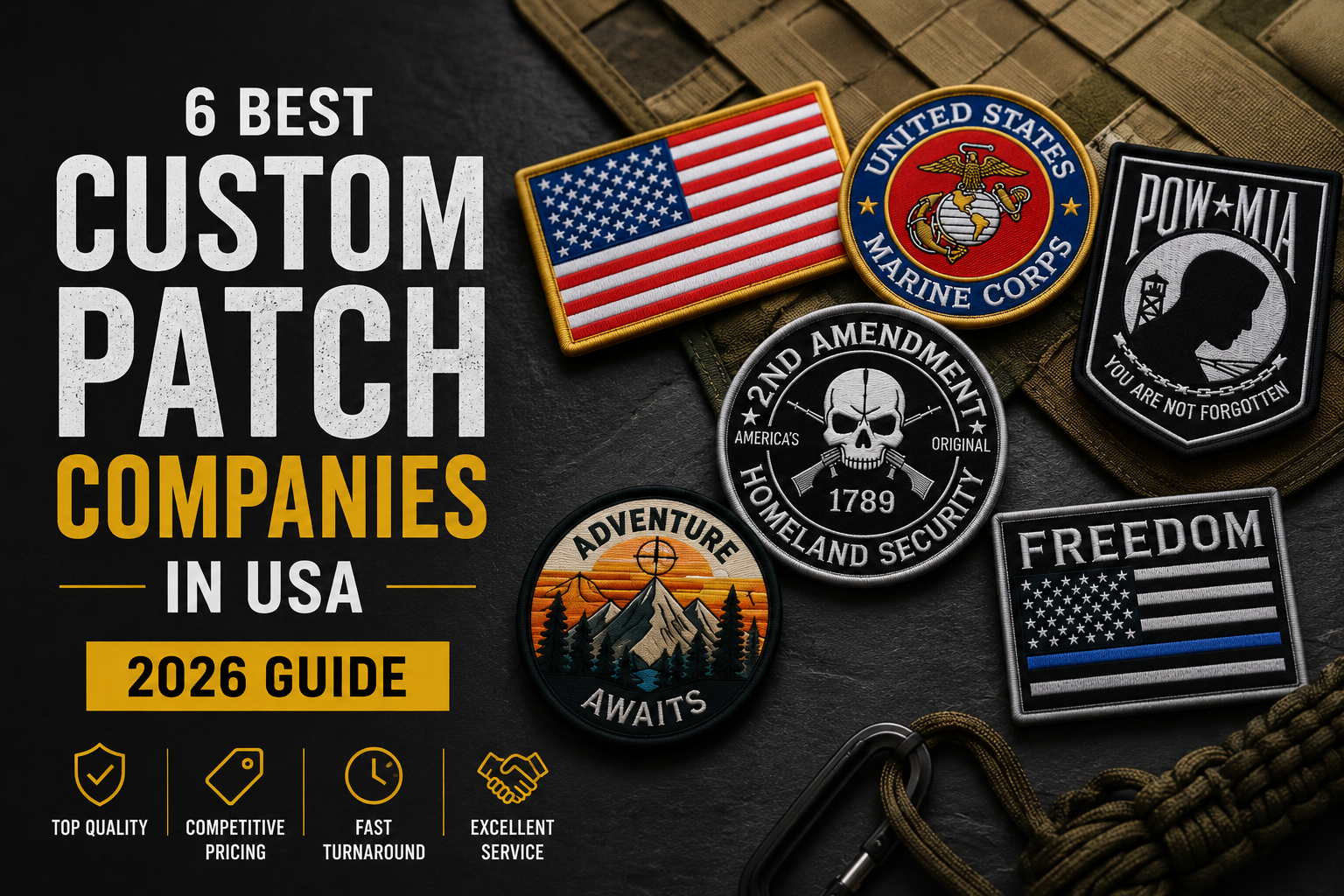
Custom patches have evolved far beyond military uniforms and scout badges. Today, they are used by businesses, sports teams, motorcycle clubs, fashion brands, nonprofits, schools, content creators, and countless organizations looking for a unique way to showcase identity and build brand recognition.
The popularity of custom patches continues to grow because they offer a practical combination of durability, affordability, and customization. Unlike printed designs that may fade over time, quality patches can last for years while maintaining their appearance through regular wear and washing.
However, ordering custom patches isn’t always straightforward. Buyers are often faced with dozens of decisions regarding materials, patch styles, backing options, design requirements, minimum order quantities, production timelines, and pricing structures.
This comprehensive guide explains everything you need to know before placing an order, including patch types, costs, design considerations, common mistakes to avoid, and how to choose the right manufacturer for your needs.
Whether you’re ordering patches for a small business, sports team, clothing brand, or personal project, this guide will help you make informed decisions and achieve professional results.
What Are Custom Patches?
Custom patches are decorative or functional fabric-based emblems designed to display logos, artwork, text, symbols, or branding elements. They can be attached to clothing, hats, bags, uniforms, jackets, and various accessories.
Modern manufacturing techniques have expanded patch production beyond traditional embroidery. Today, customers can choose from multiple materials and production methods depending on their goals, budget, and intended use.
Custom patches are commonly used for:
- Brand promotion
- Employee uniforms
- Corporate events
- Sports teams
- Military units
- Law enforcement agencies
- Motorcycle clubs
- Fashion apparel
- School organizations
- Fundraising campaigns
- Content creator merchandise
The versatility of patches makes them one of the most cost-effective forms of wearable branding available today.
Why Custom Patches Remain Popular in 2026
Many branding methods come and go, but patches continue to maintain strong demand because they offer several unique advantages.
Durability
A quality patch can withstand years of wear and repeated washing without significant deterioration.
Professional Appearance
Patches often provide a more premium and established appearance compared to printed graphics.
Versatility
They can be applied to:
- Jackets
- Hoodies
- Hats
- Backpacks
- Uniforms
- Tactical gear
- Workwear
Cost Efficiency
When ordered in larger quantities, custom patches often become one of the most affordable branding solutions available.
Strong Brand Recognition
People tend to associate embroidered or woven patches with professionalism, quality, and authenticity.
Types of Custom Patches
Understanding patch types is one of the most important steps before placing an order.
Each style offers unique advantages depending on your design and intended application.
Embroidered Patches
Embroidered patches remain the most recognizable and widely used patch style.
They are created using thread stitched directly onto a fabric backing.
Advantages
- Classic appearance
- Excellent durability
- Rich texture
- Professional look
- Suitable for uniforms
Best For
- Corporate branding
- Police departments
- Military organizations
- Sports teams
- Workwear
Potential Limitations
Fine details and small text can sometimes become difficult to reproduce accurately.
Woven Patches
Woven patches use thinner threads and tighter weaving techniques than traditional embroidery.
This allows manufacturers to reproduce significantly more detail.
Advantages
- Sharp text reproduction
- Detailed artwork
- Smooth finish
- Lightweight construction
Best For
- Complex logos
- Small lettering
- Intricate designs
- Fashion labels
Potential Limitations
They typically lack the raised texture associated with embroidered patches.
PVC Patches
PVC patches are made from flexible rubber-like materials rather than thread.
They have become increasingly popular among outdoor brands and tactical organizations.
Advantages
- Waterproof
- Weather resistant
- Easy to clean
- Extremely durable
- Vibrant colors
Best For
- Outdoor gear
- Tactical equipment
- Adventure brands
- Military applications
Potential Limitations
PVC patches generally cost more than standard embroidered options.
Chenille Patches
Chenille patches are known for their fuzzy, textured appearance.
These are commonly associated with varsity jackets and athletic programs.
Advantages
- Distinctive appearance
- Soft texture
- Premium feel
Best For
- Schools
- Sports teams
- Letterman jackets
Potential Limitations
Not ideal for highly detailed artwork.
Leather Patches
Leather patches offer a premium, sophisticated look.
They are particularly popular in fashion and lifestyle industries.
Advantages
- Luxury appearance
- Long lifespan
- Unique aging characteristics
Best For
- Denim brands
- Outdoor apparel
- Premium merchandise
Potential Limitations
Limited color options compared to embroidered patches.
Printed Patches
Printed patches use modern printing technologies to reproduce detailed graphics directly onto patch material.
Advantages
- Unlimited colors
- Photographic quality
- Detailed gradients
Best For
- Complex artwork
- Photography-based designs
- Highly detailed logos
Potential Limitations
May not offer the same textured appearance as embroidered options.
Custom Patch Comparison Table
| Patch Type | Detail Level | Durability | Cost | Best Use |
|---|---|---|---|---|
| Embroidered | Medium | Excellent | Moderate | Uniforms |
| Woven | High | Excellent | Moderate | Detailed logos |
| PVC | Medium | Exceptional | Higher | Outdoor gear |
| Chenille | Low | Good | Moderate | Sports apparel |
| Leather | Medium | Excellent | Higher | Fashion brands |
| Printed | Very High | Good | Moderate | Complex artwork |
How Much Do Custom Patches Cost in 2026?
One of the most common questions buyers ask is:
“How much should custom patches cost?”
The answer depends on several factors.
Typical Pricing Ranges
Small Orders (25–50 Pieces)
Average cost:
$4–$12 per patch
Medium Orders (100–250 Pieces)
Average cost:
$2–$6 per patch
Large Orders (500+ Pieces)
Average cost:
$0.75–$3 per patch
Generally speaking, the larger your order quantity, the lower your cost per unit.
Factors That Affect Patch Pricing
Size
Larger patches require more materials and labor.
A 5-inch patch will usually cost significantly more than a 2-inch patch.
Stitch Count
For embroidered patches, stitch density directly affects production costs.
Complex designs require more thread and machine time.
Number of Colors
Additional thread colors may increase setup complexity.
Patch Type
PVC and leather patches often cost more than standard embroidered options.
Backing Selection
Backing choices include:
- Iron-on
- Velcro
- Adhesive
- Sew-on
- Magnetic
Premium backing options may increase costs.
Quantity Ordered
Volume remains the single biggest pricing factor.
Most manufacturers offer substantial discounts for larger orders.
Expert Tip: Focus on Value, Not Just Price
Many buyers make the mistake of choosing the lowest quote available.
While price matters, quality issues can quickly erase any savings.
A poorly manufactured patch may suffer from:
- Loose stitching
- Color inconsistencies
- Weak backing adhesion
- Short lifespan
The best manufacturers balance competitive pricing with reliable quality control, accurate proofs, and responsive customer service.
In many cases, spending slightly more upfront results in a far better long-term outcome.
How to Design a Custom Patch That Looks Professional
A great patch starts long before production begins. Even the best manufacturer cannot fully compensate for a weak design.
Professional-looking patches typically follow a few key principles.
Keep the Design Simple
One of the most common mistakes is trying to include too much information.
Remember that patches are often viewed from several feet away. Clean, bold designs generally perform better than cluttered artwork packed with small details.
Good patch designs focus on:
- Clear shapes
- Readable text
- Strong contrast
- Recognizable branding
Limit Small Text
Tiny lettering may appear clear on a computer screen but become difficult to reproduce in thread.
As a general rule:
- Larger fonts work best for embroidered patches
- Woven patches handle smaller text more effectively
Use High-Contrast Colors
Colors should remain visible from a distance.
Examples include:
- Black and white
- Navy and gold
- Red and white
- Green and white
Avoid placing similar shades directly next to each other.
Choose the Right Shape
Custom shapes often create stronger visual impact than standard circles or rectangles.
Popular shapes include:
- Shield patches
- Crest designs
- Badge styles
- Custom logo outlines
- Circular emblems
The shape should support the design rather than complicate it.
Understanding Patch Backing Options
The backing determines how the patch attaches to garments or equipment.
Choosing the wrong backing can create unnecessary problems later.
Sew-On Backing
The most durable option.
Best For
- Uniforms
- Workwear
- Permanent applications
Advantages
- Long lifespan
- Strong attachment
- Professional finish
Iron-On Backing
Heat-activated adhesive allows patches to be attached using an iron or heat press.
Best For
- Casual apparel
- Small businesses
- Promotional merchandise
Advantages
- Easy application
- Affordable
- Beginner-friendly
Velcro Backing
Widely used in military and tactical industries.
Best For
- Tactical gear
- Law enforcement
- Outdoor equipment
Advantages
- Removable
- Reusable
- Easy replacement
Adhesive Backing
A peel-and-stick option for temporary use.
Best For
- Events
- Promotional campaigns
- Short-term applications
Advantages
- Fast installation
Limitations
- Less durable than other options
The Custom Patch Ordering Process
Many first-time buyers are surprised by how simple the ordering process can be when working with a reputable manufacturer.
Step 1: Create or Upload Artwork
Most companies accept:
- AI files
- EPS files
- PDF files
- PNG files
- JPEG files
Even sketches can often be converted into production-ready artwork.
Step 2: Choose Your Patch Type
Select the material that best fits your design and intended use.
Questions to ask:
- Do I need fine details?
- Will the patch be exposed to weather?
- Is texture important?
- What’s my budget?
Step 3: Select Size and Quantity
Most manufacturers offer pricing based on dimensions and order volume.
Choosing the correct size helps balance visibility and cost.
Step 4: Review Digital Proofs
Never skip the proofing stage.
Review carefully:
- Colors
- Spelling
- Borders
- Dimensions
- Placement
Approving an incorrect proof often leads to costly mistakes.
Step 5: Production and Shipping
Once approved, production begins.
Most manufacturers require:
- 7–14 business days for production
- Additional shipping time
Rush options may be available.
10 Common Custom Patch Mistakes Buyers Make
Avoiding these mistakes can save significant time and money.
1. Choosing a Company Based Solely on Price
Low-cost providers often cut corners on materials and quality control.
2. Using Low-Resolution Artwork
Poor artwork leads to poor results.
Always provide the highest-quality files available.
3. Ordering the Wrong Patch Type
Different patch styles serve different purposes.
A detailed logo may look better as a woven patch than an embroidered patch.
4. Ignoring Minimum Order Requirements
Some suppliers require larger quantities than others.
Always verify minimums before ordering.
5. Not Requesting Samples
Physical samples can help evaluate quality before placing larger orders.
6. Overcomplicating the Design
Simpler designs often produce stronger visual results.
7. Choosing the Wrong Backing
The wrong attachment method can reduce usability and lifespan.
8. Rushing the Proofing Process
Always double-check artwork before approval.
9. Underestimating Production Timelines
Plan ahead for events and product launches.
10. Ignoring Customer Reviews
Independent reviews often reveal quality and service issues that marketing materials won’t mention.
How Long Does It Take to Make Custom Patches?
Production times vary depending on complexity and manufacturer capacity.
Typical timelines include:
| Stage | Time |
|---|---|
| Artwork Review | 1–2 Days |
| Proof Approval | 1–3 Days |
| Manufacturing | 5–12 Days |
| Shipping | 2–7 Days |
Most standard orders are completed within two to three weeks.
Rush services may shorten this timeframe.
Embroidered vs Woven Patches: Which Is Better?
This is one of the most frequently asked questions in the industry.
The answer depends on your design.
Choose Embroidered Patches If:
- You want a traditional look
- Your logo has bold elements
- Texture is important
- You need maximum durability
Choose Woven Patches If:
- Your design contains fine details
- You need small text
- You want a smooth finish
- Precision is a priority
For highly detailed logos, woven patches often deliver superior results.
For classic uniform applications, embroidered patches remain the preferred choice.
The Future of Custom Patches
The custom patch industry continues to evolve.
Several trends are shaping the market in 2026:
Sustainable Materials
Manufacturers are increasingly offering eco-friendly fabrics and recycled materials.
Faster Production
Automation continues reducing turnaround times.
Advanced PVC Designs
Modern PVC manufacturing allows greater detail and flexibility than ever before.
Small-Batch Manufacturing
More companies now support low minimum order quantities, making custom patches accessible to startups and creators.
E-Commerce Growth
Online patch ordering platforms have simplified the buying process for customers worldwide.
As customization becomes increasingly important across industries, demand for high-quality patches is expected to remain strong.
Best Custom Patch Manufacturers in the USA (2026)
Choosing the right manufacturer can have a major impact on quality, turnaround times, customer service, and overall value.
While dozens of companies offer custom patch production, a handful consistently stand out for their reliability and product quality.
Below are some of the most recognized custom patch suppliers serving businesses, organizations, and individuals across the United States.
1. The/Studio
The/Studio has become one of the largest custom product manufacturers in the industry.
Strengths
- Wide variety of patch styles
- Strong online ordering system
- Low minimum quantities
- Global manufacturing capabilities
Best For
- Small businesses
- Startups
- E-commerce brands
Potential Drawbacks
- Premium pricing on some orders
2. GS-JJ
GS-JJ is well-known for producing custom patches, challenge coins, and promotional products.
Strengths
- Competitive pricing
- Large product catalog
- Fast production
Best For
- Clubs
- Schools
- Nonprofits
- Events
Potential Drawbacks
- Customer support experiences can vary
3. Ninja Patches
Ninja Patches has built a strong reputation for customer service and embroidery quality.
Strengths
- Excellent proofing process
- High-quality embroidery
- Responsive support
Best For
- Businesses
- Organizations
- Uniform programs
Potential Drawbacks
- Smaller product selection than larger competitors
4. Patches4Less
Patches4Less focuses heavily on affordability and bulk orders.
Strengths
- Competitive pricing
- Strong bulk discounts
- Multiple patch styles
Best For
- Large organizations
- Sports teams
- Fundraising campaigns
Potential Drawbacks
- Design assistance may be limited
5. World Emblem
World Emblem has decades of experience producing patches for major brands and uniform providers.
Strengths
- Industry experience
- High production capacity
- Consistent quality
Best For
- Enterprise clients
- National organizations
- Uniform suppliers
Potential Drawbacks
- Less suitable for very small orders
6. Quality Patch Manufacturing
A long-standing supplier known for dependable patch production.
Strengths
- Experienced team
- Custom solutions
- Multiple backing options
Best For
- Government agencies
- Uniform applications
- Specialty projects
Which Custom Patch Company Is Best?
The answer depends on your specific needs.
| Need | Recommended Choice |
|---|---|
| Small Orders | The/Studio |
| Bulk Orders | Patches4Less |
| Detailed Embroidery | Ninja Patches |
| Corporate Uniforms | World Emblem |
| Budget-Friendly Pricing | GS-JJ |
| Specialized Projects | Quality Patch Manufacturing |
Instead of asking which company is “best,” buyers should ask which company is best for their particular project.
Best Custom Patch Type for Different Industries
Small Businesses
Recommended:
- Embroidered patches
- Woven patches
These provide a professional appearance while remaining cost-effective.
Clothing Brands
Recommended:
- Woven patches
- Leather patches
These options offer clean aesthetics and premium branding opportunities.
Outdoor and Adventure Brands
Recommended:
- PVC patches
PVC performs exceptionally well in harsh environments.
Schools and Sports Teams
Recommended:
- Chenille patches
- Embroidered patches
These remain the traditional favorites for athletic programs.
Military and Tactical Applications
Recommended:
- PVC patches
- Velcro-backed embroidered patches
Durability and flexibility are often top priorities.
How to Choose the Right Manufacturer
Run through this checklist before placing any order:
✅ Does the company publish real prices on their website?
✅ Do they provide a digital proof before production begins?
✅ Do they have verifiable independent reviews (Trustpilot, Google)?
✅ Is their minimum order quantity compatible with your project size?
✅ Does their specialty align with your patch type (military, fashion, sports, etc.)?
✅ Is their turnaround time realistic for your deadline — including the proof approval stage?
✅ Do they have a clear remake or refund policy for defective patches?
✅ Can you speak to a human before committing to an order?
If a company checks all eight boxes, you’re in safe hands. If they fail more than two, keep looking — there are enough quality suppliers in this market that you don’t need to compromise.
Expert Buying Checklist
Before placing your order, confirm:
✓ Artwork is high resolution
✓ Colors are finalized
✓ Patch dimensions are correct
✓ Backing method is selected
✓ Quantity is accurate
✓ Shipping timeline meets your deadline
✓ Digital proof is approved
✓ Manufacturer reviews have been checked
Completing this checklist can prevent many common issues.
Frequently Asked Questions
What is the cheapest type of custom patch?
Standard embroidered patches are often the most affordable option for most buyers.
Can I order only one custom patch?
Some manufacturers offer single-patch orders, although costs per unit are usually much higher.
Are PVC patches waterproof?
Yes. PVC patches are highly resistant to water, dirt, and weather exposure.
Which patch type lasts the longest?
PVC and high-quality embroidered patches typically provide the longest lifespan.
Are custom patches washable?
Most embroidered, woven, and PVC patches can withstand normal washing when properly attached.
What size patch should I choose?
Most logo patches range between 2 and 4 inches, depending on placement and design complexity.
Can patches be ironed onto any fabric?
No. Some materials may not tolerate the heat required for iron-on applications.
Do custom patches fade?
Quality patches are designed to resist fading, though prolonged exposure to sunlight may affect colors over time.
Are woven patches better for small text?
Yes. Woven patches generally reproduce small lettering more accurately than embroidered patches.
How long do patches usually last?
Properly manufactured patches can last for many years under normal use conditions.
What is the difference between merrow and laser-cut borders?
Merrow borders create a traditional stitched edge, while laser-cut borders allow more complex shapes and cleaner outlines.
Can custom patches be removed?
Velcro-backed patches are designed for easy removal. Sew-on patches are generally intended to be permanent.
Do manufacturers help with artwork?
Many suppliers offer design assistance or artwork cleanup services.
What is the best backing for uniforms?
Sew-on backing remains the most durable choice for uniform applications.
Are leather patches real leather?
Some manufacturers use genuine leather, while others use synthetic alternatives.
Always verify materials before ordering.
Final Thoughts
Custom patches remain one of the most versatile and cost-effective branding tools available in 2026. Whether you’re creating patches for a business, clothing brand, sports team, nonprofit, or personal project, understanding the differences between materials, backing options, pricing structures, and manufacturers can significantly improve your results.
The most successful patch projects begin with a clear design, realistic expectations, and a trusted manufacturing partner. By focusing on quality, functionality, and long-term value rather than simply choosing the lowest price, buyers can create patches that effectively represent their brand and stand the test of time.
As customization continues to shape modern branding, custom patches are likely to remain a powerful and practical solution for organizations of every size.