



Why Is My Dog Shaking? Every Cause Explained — From Harmless to Emergency
⚠️ Emergency First: If your dog is shaking AND showing any of these signs, go to a vet immediately
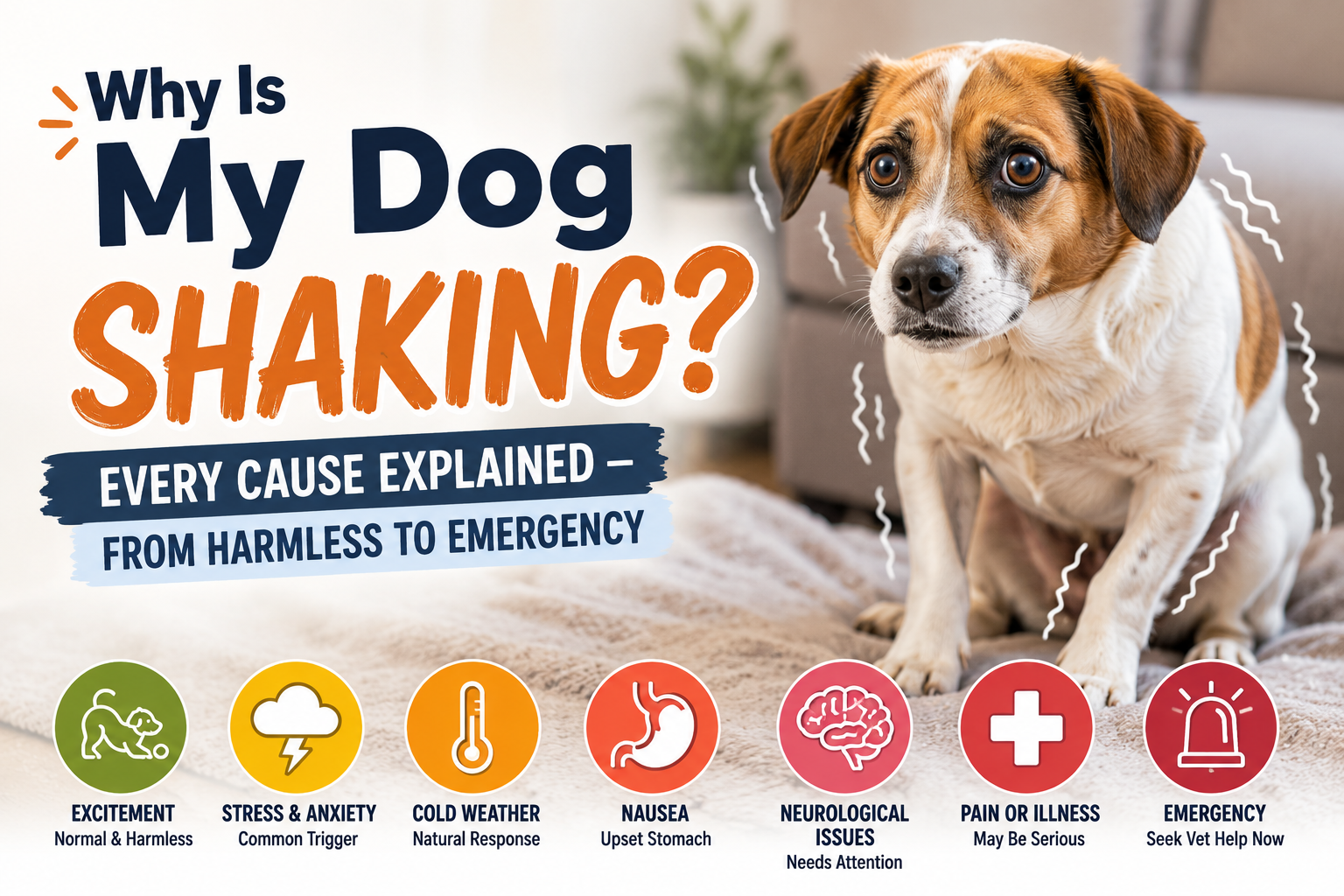
⚠️ Emergency First: If your dog is shaking AND showing any of these signs, go to a vet immediately — do not wait: vomiting blood, collapse, seizures, pale or blue gums, suspected poisoning, difficulty breathing, or sudden loss of coordination.
You’re watching your dog tremble and your mind goes to the worst place immediately. Is it serious? Is it pain? Should you be rushing to the emergency vet right now — or is this just your dog being dramatically cold?
The honest answer is: it depends on the whole picture. Shaking in dogs can mean a dozen different things, ranging from pure excitement (“you’re HOME!”) to a genuine medical emergency. The key is knowing which signals to read alongside the trembling.
This guide walks you through every cause of dog shaking — sorted from benign to urgent — plus a clear breakdown of when to watch and wait versus when to act immediately. We cover every keyword your search brought you here for: why your dog is trembling and shaking, why your dog is shaking and panting, why your dog is shaking his head, and what to do if your dog is shaking and throwing up.
Trembling, Shivering, and Muscle Tremors: What’s the Difference?
Before jumping to causes, it helps to know what type of shaking you’re actually seeing — because not all dog shaking is the same.
Trembling is a voluntary behavioral response. It happens when a dog is emotionally activated — scared, excited, anxious, or anticipating something. The dog’s body shakes with rapid, repetitive muscle contractions, but the dog is conscious and responsive. Watch for tucked tails, whale eye, yawning, or lip licking alongside it.
Shivering is involuntary and is the body’s response to cold. It looks similar to trembling but is triggered by low body temperature — being outside in winter, getting wet, or being in an air-conditioned space too long. Shivering typically stops once the dog warms up.
Muscle tremors are involuntary, repetitive muscle spasms that can affect one part of the body or the whole body. These are usually caused by neurological dysfunction, toxin exposure, or certain medical conditions. Tremors often look more intense and mechanical than regular shivering and may be accompanied by vomiting, lethargy, or disorientation.
Knowing which type you’re watching helps you answer the most important question: is this behavioral, temperature-related, or medical?
Harmless Reasons Your Dog Is Shaking
Start here. Most dogs who shake do so for completely normal, non-medical reasons. Run through this list first before jumping to worst-case scenarios.
1. Excitement
Dogs feel big emotions with their whole bodies — and when those emotions are positive, shaking is often part of the reaction. Your dog may tremble when you come home, when you grab the leash, when dinner is being prepared, or when they see a favorite person or dog.
This type of full-body wiggle is especially common in smaller breeds. It’s your dog’s version of barely being able to contain themselves. No action needed — enjoy it.
2. Cold
Just like humans, dogs shiver to generate body heat when they’re cold. This is especially common in small breeds, short-haired dogs, senior dogs, and dogs who’ve been out in rain or cold weather. Dogs with thin coats — Greyhounds, Chihuahuas, Whippets, Dachshunds — are particularly sensitive.
What to do: A warm blanket, a dog sweater, or moving your pup to a warmer space usually resolves shivering within minutes. If it doesn’t stop once they’re warm, the shaking isn’t about cold.
3. Drying Off After Getting Wet
Dogs shake vigorously after baths, swims, or rainy walks — this is purely mechanical. A dog can shake off about 70% of the water on their coat in just a few seconds. It’s instinct, not distress.
Watch for a few short, vigorous shakes in a row rather than continuous trembling. After those shake-offs, if your dog continues to tremble, they may simply be chilled from getting wet.
4. Dreaming During Sleep
If your dog twitches, paddles their legs, or trembles while sleeping, they’re most likely in REM sleep — the dream stage. Dogs dream, and their bodies sometimes act it out with small muscle movements. A sleeping dog who’s “shaking” isn’t having a nightmare or a seizure.
You can gently call their name to rouse them if it seems intense. They’ll wake up normally and return to their usual self.
5. Post-Exercise Muscle Fatigue
After intense physical activity, a dog’s muscles may tremble as they cool down — similar to how your own legs shake after a hard workout. This usually resolves within 15–20 minutes of rest.
Emotional and Behavioral Causes of Dog Shaking
6. Fear and Anxiety
This is one of the most common causes of shaking in dogs. Thunderstorms, fireworks, car trips, vet visits, new environments, strangers, or other dogs can all trigger fear-based trembling. Some dogs are much more sensitive than others, and the shaking is often accompanied by:
- Panting or yawning (early stress signals)
- Tucked tail or flattened ears
- Hiding or clinging to their owner
- Drooling
- Pacing or restlessness
Stress-related shaking involves the whole body and generally stops once the trigger is removed. If it stops when the stressor leaves, anxiety is the likely cause.
What to do: For mild situational anxiety — provide a calm, quiet space, white noise, or gentle reassurance. For severe or chronic anxiety, speak to your vet about anti-anxiety medication or a referral to a veterinary behaviorist.
7. Separation Anxiety
Some dogs begin shaking the moment they sense their owner is about to leave — picking up on cues like shoes being put on, keys being grabbed, or bags being packed. This type of anticipatory anxiety-shaking can be intense and is often accompanied by whining, barking, or destructive behavior when left alone.
8. Attention-Seeking
Some dogs — particularly smaller breeds who’ve learned that trembling brings comfort and attention — may shake as a learned behavior to get a response from their owner. If your dog shakes selectively in situations where they want affection, and stops when they get it, this is worth considering.
Medical Causes of Dog Shaking
These require either a vet visit or careful monitoring. Some are manageable conditions; others are emergencies.
9. Pain or Injury
Pain is one of the most important medical causes of shaking to recognize. A dog in pain may tremble as the body’s response to discomfort — this can be from arthritis, a muscle strain, an internal injury, joint disease, or post-surgical pain. Signs to watch alongside shaking:
- Whining or crying when touched
- Reluctance to move, sit, or climb stairs
- Changes in appetite
- Limping or favoring a limb
- Restlessness and inability to settle
Older dogs are particularly prone to arthritis-related shaking, especially in the hind legs or jaw. If your dog is trembling and clearly uncomfortable — schedule a vet visit.
10. Nausea and Upset Stomach
Dogs shake when they feel nauseous — just as humans might shiver when they’re about to vomit. Nausea can come from motion sickness, eating something disagreeable, medication side effects, or underlying GI conditions. You’ll often see drooling, lip licking, loss of appetite, and a hunched posture alongside the trembling.
Shaking that resolves after your dog vomits or has a bowel movement is typically nausea-related. Shaking that persists or worsens after vomiting needs veterinary evaluation.
11. Generalized Tremor Syndrome (GTS) — “White Shaker Syndrome”
GTS is an inflammatory brain condition that causes full-body tremors in otherwise healthy dogs. Despite being nicknamed “white shaker syndrome” because it was first observed in small white breeds like Maltese and West Highland White Terriers, it can affect any breed, size, or color.
Key facts about GTS:
- Symptoms typically begin between 9 months and 2 years of age
- The tremors are continuous and worsen with activity or stress
- Dogs remain alert and responsive
- The exact cause is unknown — possibly autoimmune
- It responds well to corticosteroids like prednisone, often within a week of treatment
GTS is not life-threatening but does require a formal diagnosis and ongoing management by a vet.
12. Hypoglycemia (Low Blood Sugar)
When blood sugar drops too low, a dog can shake, become weak, disoriented, and in severe cases, have a seizure or lose consciousness. This is more common in puppies, toy breeds (Chihuahuas, Toy Poodles, Yorkshire Terriers), and diabetic dogs.
Signs of hypoglycemia: shaking, weakness, stumbling, glassy eyes, loss of coordination, and pale gums.
Emergency first aid: If you suspect low blood sugar, rub a small amount of honey or corn syrup (not sugar-free) on your dog’s gums — not their tongue — and get to a vet immediately. Do not use sugar-free products; xylitol is toxic to dogs.
13. Poisoning or Toxin Ingestion
This is one of the most urgent causes of sudden, severe shaking. If your dog has gotten into something toxic, the body’s response can include violent tremors, seizure-like muscle activity, drooling, vomiting, confusion, and collapse.
Common toxins that cause shaking in dogs include:
- Chocolate and caffeine
- Xylitol (artificial sweetener found in gum, peanut butter, and baked goods)
- Grapes and raisins
- Certain mushrooms
- Rat poison (rodenticides)
- Household chemicals and cleaning products
- Certain medications (ibuprofen, acetaminophen, antidepressants)
- Nicotine
If you suspect poisoning: this is an emergency. Call your vet, the nearest emergency clinic, or the ASPCA Animal Poison Control Center (888-426-4435) immediately. Do not wait for symptoms to “improve.”
14. Distemper
Canine distemper is a serious, highly contagious viral disease that attacks the nervous system, respiratory system, and GI tract. Shaking and muscle tremors are common neurological signs. Other symptoms include fever, nasal discharge, lethargy, coughing, and vomiting.
Distemper is largely preventable through vaccination. Unvaccinated dogs — particularly puppies — are at highest risk. If your dog is unvaccinated and showing these combined symptoms, seek emergency care.
15. Addison’s Disease (Hypoadrenocorticism)
Addison’s disease occurs when the adrenal glands don’t produce enough cortisol and aldosterone. This hormonal deficiency causes episodes of weakness, lethargy, shaking, vomiting, and can escalate to an “Addisonian crisis” — sudden collapse, severe dehydration, and life-threatening electrolyte imbalances.
Addison’s is sometimes called “the great imitator” because its symptoms mimic many other conditions. Diagnosis requires blood tests. With proper management (hormone replacement therapy), dogs with Addison’s can live full, normal lives.
16. Kidney Disease
Chronic kidney failure allows toxins to build up in the bloodstream, which can trigger muscle tremors and shaking. Other signs include increased thirst and urination, loss of appetite, weight loss, and bad breath with a chemical odor. Kidney disease is more common in senior dogs and requires ongoing veterinary management.
17. Neurological Conditions
Seizures, vestibular disease, inflammatory brain disease, and demyelinating disorders can all cause shaking that looks alarming. Seizures are often confused with tremors but involve loss of consciousness, uncontrolled paddling of the legs, drooling, and a “post-ictal” confused state afterward.
Vestibular disease — common in senior dogs — causes sudden loss of balance, head tilt, rapid eye movement, and falling or circling. It looks terrifying but is often not as serious as it appears and can resolve on its own with supportive care.
18. Hypocalcemia (Low Blood Calcium)
This condition is most common in nursing mother dogs and occurs when the demands of milk production deplete calcium stores. Signs include nervousness, panting, stiffness, and whole-body tremors (called eclampsia or puerperal tetany). This is a medical emergency — get the dog to a vet immediately.
19. Senior Dog Tremors (“The Senior Shake”)
Older dogs commonly develop mild tremors in the hind legs as muscle mass decreases and neurological changes accumulate with age. This type of shaking is typically low-intensity, consistent, and most visible when standing. It’s often not painful, but a vet visit can help rule out arthritis, neurological decline, or other treatable causes.
Regular wellness visits for senior dogs — ideally twice yearly — allow for early detection of conditions that contribute to tremors.
Why Is My Dog Shaking and Panting?
When shaking and panting occur together, the combination is more clinically significant than either symptom alone. The pairing typically points to one of these causes:
Pain or injury — panting and trembling together are a classic pain response. Look for reluctance to move, whining, or sensitivity to touch in a specific area.
Anxiety or severe stress — high-intensity fear events like fireworks or thunderstorms can produce both panting and shaking simultaneously. The dog is in a heightened sympathetic (“fight or flight”) state.
Heatstroke — if your dog has been in a hot car, outside in summer heat, or in a poorly ventilated space, shaking and panting together with red gums and lethargy signals heatstroke. This is a life-threatening emergency. Move the dog to a cool area, apply cool (not cold) water, and get to a vet immediately.
Cushing’s disease (hyperadrenocorticism) — this hormonal condition causes excessive cortisol production. Symptoms include panting, a pot-bellied appearance, increased thirst and urination, hair loss, and tremors.
Nausea — dogs pant when they feel nauseous. Combined with shaking, this often precedes vomiting.
Certain medications — some drugs cause panting and tremors as side effects, especially steroids or certain pain medications.
Why Is My Dog Shaking and Throwing Up?
Vomiting and shaking together raise the concern level significantly. The combination suggests the body is under serious physical stress. Common causes:
Toxin ingestion — this is the most urgent possibility. Poisoning causes both GI distress (vomiting) and neurological effects (tremors) simultaneously.
Severe pain — pancreatitis, bloat (gastric dilation-volvulus), or internal injury can cause both shaking and vomiting. Bloat is a life-threatening emergency where the stomach fills with gas and can twist — watch for a distended abdomen, restlessness, and repeated unsuccessful attempts to vomit.
Hypoglycemia — low blood sugar can cause both nausea and tremors together.
Neurological conditions — vestibular disease and seizures can both cause vomiting alongside shaking.
Severe anxiety — extreme fear can cause a dog to vomit from the adrenaline response, accompanied by shaking.
What to do: If your dog vomits once and then seems to recover, monitor closely. If vomiting continues, worsens, or is paired with persistent shaking — especially if the dog appears weak, disoriented, or is unable to stand — treat it as an emergency.
Why Is My Dog Shaking His Head?
Head shaking that’s specifically isolated to the head (not full-body trembling) has its own set of causes, most of which are localized to the ears or face.
Ear infection — the most common reason for persistent head shaking. Bacteria, yeast, ear mites, and allergies can all cause ear infections. Look for: head shaking, scratching at ears, redness or inflammation inside the ear canal, a brown or yellow discharge, and a foul smell. Ear infections need veterinary treatment to prevent worsening or spreading to the middle or inner ear.
Ear wax buildup — excessive wax can cause discomfort and itching without a full infection. If you notice a smell and brown debris but no inflammation, a gentle ear cleaning may resolve the issue. Ask your vet to recommend a safe ear cleaner.
Foreign object in the ear — grass seeds, bugs, or debris lodged in the ear canal will cause immediate, intense head shaking. Do not attempt to remove it yourself — have a vet examine the ear.
Allergies — environmental or food allergies frequently cause ear inflammation and itching, which manifests as head shaking and scratching.
Idiopathic head tremors — a less common condition where a dog experiences episodic, involuntary, rhythmic head bobbing (side to side or up and down). This is most often seen in certain breeds like Bulldogs, Dobermans, and Labrador Retrievers. Episodes usually last a few minutes and the dog remains fully conscious. While alarming to watch, idiopathic head tremors are generally benign and often resolve on their own. Always have your vet evaluate any new head tremor to rule out seizures or other neurological causes.
Partial seizure — in rare cases, repetitive head movements can be a partial (focal) seizure involving only part of the brain.
When to Call the Vet: A Clear Decision Guide
Watch at home if:
- Shaking stops within a few minutes and your dog returns to normal behavior
- The cause is clearly cold, excitement, or getting wet
- Your dog is eating, drinking, and acting normally otherwise
- Shaking is mild and intermittent
Schedule a vet appointment (non-emergency) if:
- Shaking is new and recurring
- You suspect chronic anxiety or fear responses
- Your senior dog has developed new or worsening tremors
- Head shaking has been going on for more than a day or two
- Your dog’s energy levels or appetite have changed alongside the shaking
Go to the vet or emergency clinic immediately if:
- Shaking is sudden, severe, and you don’t know the cause
- Shaking is combined with vomiting, especially multiple times
- You suspect your dog ate something toxic
- Shaking is paired with collapse, weakness, or inability to stand
- Gums are pale, white, blue, or tacky (not the usual pink and moist)
- Your dog is disoriented, walking in circles, or unresponsive
- The dog is panting heavily in a cool environment
- Shaking does not stop after the apparent trigger is gone
- Your dog has had these symptoms before and been diagnosed with a condition that can escalate (Addison’s, epilepsy, diabetes)
Breed-Specific Shaking: Which Dogs Shake More?
Some breeds are simply more prone to shaking than others — knowing this about your dog helps avoid unnecessary panic:
Small breeds in general — Chihuahuas, Toy Poodles, Yorkshire Terriers, and similar small dogs have higher metabolic rates, more difficulty regulating body temperature, and tend toward anxious temperaments. Many small dogs shake regularly for entirely benign reasons.
Bernese Mountain Dogs, Chow Chows, and English Springer Spaniels are noted as breeds with higher rates of tremors — often age-related or neurological.
White small breeds (Maltese, West Highland White Terriers, Bichons) have a higher incidence of Generalized Tremor Syndrome.
Senior dogs of any breed may develop mild rear-leg tremors as a normal part of aging, often related to muscle loss or mild neurological change.
What to Do at Home While You Wait to See the Vet
If the shaking isn’t an emergency but you’ve scheduled a vet visit, here are steps you can take in the meantime:
For cold shaking: Warm blankets, a dog sweater, and a heated indoor space. Limit time outside in cold or wet conditions.
For anxiety shaking: Remove the stressor if possible. Create a quiet, safe retreat — a covered crate with a familiar blanket works well. White noise or calming music can help. Never punish a dog for fear-based shaking; it makes anxiety worse.
For nausea: Withhold food for 12 hours to let the stomach settle. Offer small amounts of water. Reintroduce food with a bland diet — plain boiled chicken and white rice in small portions. Never give human medications (ibuprofen, Tylenol, Pepto-Bismol) to dogs — many are toxic.
For suspected pain: Keep the dog calm and restrict movement. Avoid manipulating the area that seems to cause discomfort. Do not give NSAIDs intended for humans.
Document what you see: Keep a log of when shaking occurs, how long it lasts, what your dog was doing beforehand, and any other symptoms. This information helps your vet diagnose faster and more accurately.
Frequently Asked Questions
Why is my dog trembling and shaking for no apparent reason? “No apparent reason” is usually the hardest and most important scenario to take seriously. If you genuinely cannot identify an emotional trigger (excitement, fear, cold) and the shaking is new, persistent, or intense — see a vet. Conditions like GTS, hypoglycemia, early pain from an injury, and neurological conditions can all appear to come “out of nowhere.”
Why is my dog shaking so much? The intensity of shaking matters. Intense or violent tremors that don’t stop, are getting worse, or are affecting your dog’s ability to function (standing, walking, eating) suggest a medical cause rather than a behavioral one. Persistent or worsening shaking always warrants a vet visit.
Is it normal for small dogs to shake all the time? Small dogs do shake more frequently than large breeds, and many of these episodes are benign — related to their high energy, temperature sensitivity, and sometimes anxious nature. But “small dogs shake a lot” is not a reason to dismiss shaking. Monitor for changes in pattern, new accompanying symptoms, or shaking that seems to cause distress.
My dog is shaking in their sleep — should I be worried? Almost always, no. Twitching, paddling, and trembling during sleep is normal REM sleep behavior. The dog is dreaming. If you’re concerned, gently call their name — they’ll wake normally if it’s a dream, and will likely not immediately return to baseline after a seizure.
Can stress make my dog physically sick with shaking and vomiting? Yes. Severe stress triggers a strong adrenaline response that can cause both shaking and vomiting in dogs, particularly in high-anxiety situations. If this happens regularly, speak to your vet — chronic anxiety is a health issue that can be addressed with behavioral therapy, environmental management, and sometimes medication.