



75+ Cold Lunch Ideas for Work, Kids, and Meal Prep (No Microwave Needed)
Why Cold Lunches Are Actually Better Than Hot Ones (Most of the Time) No microwave queue. No smell that
Why Cold Lunches Are Actually Better Than Hot Ones (Most of the Time)
No microwave queue. No smell that fills the office. No container that explodes in the breakroom. Cold lunches pack faster, travel better, and — when done right — are just as filling and nutritious as anything you’d reheat.
The problem isn’t cold lunches. It’s running out of ideas and defaulting to the same sad desk sandwich every week.
This guide is organized by who you’re packing for and what you need right now — work lunches with no microwave access, school lunchboxes for kids, healthy options, kindergartener-friendly bites, and a full meal prep formula so you’re never starting from scratch on a Tuesday morning.
The No-Think Cold Lunch Formula
Before the lists, here’s the single most practical thing in this guide — a simple formula that builds any satisfying cold lunch from whatever you have on hand. No recipe required.
Protein + Carb + Produce + Fat or Flavor Extra
| Category | Easy Options |
|---|---|
| Protein | Rotisserie chicken, tuna, hard-boiled eggs, deli turkey, chickpeas, edamame, string cheese, Greek yogurt, cottage cheese |
| Carb | Wrap, crackers, pasta, bread, rice cakes, pita, cooked grains (quinoa, farro) |
| Produce | Cucumber, cherry tomatoes, grapes, apple slices, carrot sticks, sugar snap peas, berries, bell pepper strips |
| Fat or Flavor | Hummus, guacamole, cheese, nuts, ranch dip, vinaigrette, pesto, nut butter |
Pick one from each column and you have a complete, satisfying cold lunch — every time. The rest of this guide gives you specific combinations that work especially well.
Cold Lunch Ideas for Work (No Microwave Needed)
These are designed for full adult appetites, real busy schedules, and zero access to heat. All of them travel well in standard containers and hold for four or more hours without refrigeration issues when packed with an ice pack.
Wraps and Sandwiches
Classic chicken salad wrap. Rotisserie chicken mixed with mayo, celery, and a pinch of dill, rolled in a flour tortilla with lettuce. One of the most reliable no-reheat work lunches — filling, easy to eat at a desk, and prep takes under five minutes if you start with store-bought rotisserie chicken.
Turkey cranberry pinwheels. Deli turkey, cream cheese, and whole berry cranberry sauce spread on a tortilla, rolled tight and sliced into rounds. These actually hold their shape well in a container and look more impressive than the effort warrants.
BLT-style lettuce wrap. Crispy bacon (pre-cooked), cherry tomatoes, avocado, and mayo wrapped in large romaine or butter lettuce leaves — lower carb, high flavor.
Smashed white bean and herb sandwich. Canned white beans mashed with lemon, garlic, and fresh herbs on sourdough with arugula. One of the best vegetarian options for people who need a filling work lunch without meat.
Egg salad on crackers. Hard-boiled eggs mashed with Dijon, a little mayo, and chives, served with sturdy crackers on the side rather than on bread (which gets soggy by lunchtime).
Sun-dried tomato and mozzarella panini — served cold. Any melted panini or sandwich made the night before tastes great cold the next day — especially those with strong, oil-based flavors.
Salads That Actually Fill You Up
Mason jar pasta salad. Italian pasta salad with olives, pepperoni, cucumber, and cherry tomatoes in a lemon-herb vinaigrette. Key tip: toss the pasta with dressing while still warm so it absorbs flavor, then refrigerate overnight.
Orzo Greek salad. Orzo with cucumber, kalamata olives, red onion, cherry tomatoes, and feta in a red wine vinaigrette. Holds well, tastes better the next day.
Southwest quinoa salad. Quinoa with black beans, corn, red bell pepper, avocado, and a lime-cumin dressing. High protein, meal-prep friendly, and genuinely good cold.
Farro and roasted vegetable salad. Any cooked grain paired with whatever roasted vegetables you have from dinner the night before, with a handful of nuts or seeds for crunch and a tahini dressing.
Tuna niçoise-inspired bowl. Canned or pouch tuna, hard-boiled eggs, green beans, cherry tomatoes, olives, and red onion with Dijon vinaigrette — no cooking required beyond boiling the eggs.
Asian slaw with edamame. Shredded cabbage, shredded carrots, edamame, sliced almonds, mandarin orange segments, and sesame-ginger dressing. One of the few salads that genuinely stays crisp overnight.
Protein Boxes and Snack-Style Lunches
The “adult snack box” has become one of the most popular no-reheat work lunch formats — essentially a Lunchable but actually satisfying. Pack these in compartmented containers.
Classic protein box: Hard-boiled eggs + cubed cheddar + whole grain crackers + apple slices + almonds
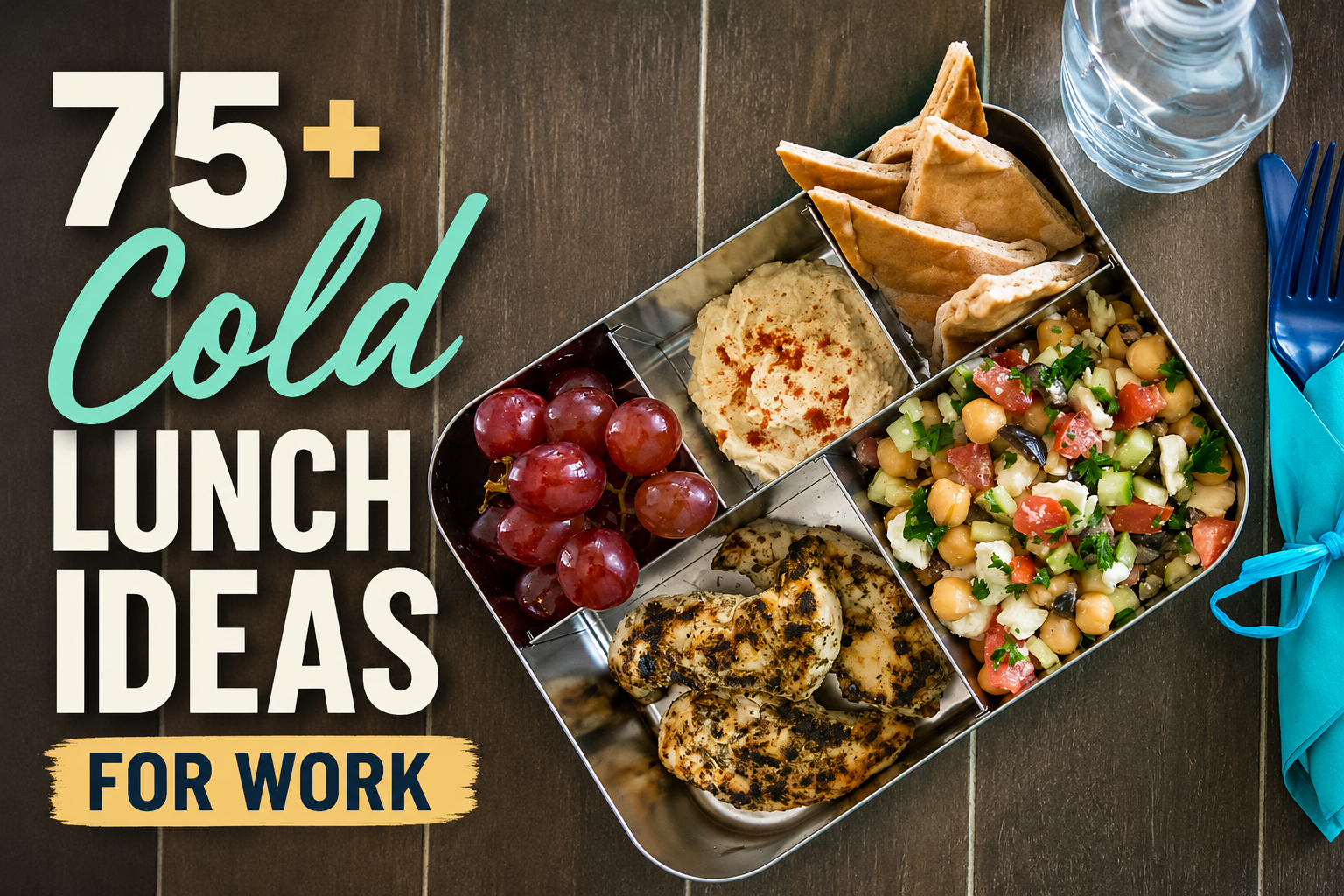
Mediterranean box: Hummus + pita triangles + cucumber + cherry tomatoes + olives + feta + grapes
Deli charcuterie box: Sliced turkey or salami + brie or Swiss + crackers + Dijon + cornichons + grapes
Cottage cheese power box: Cottage cheese + cherry tomatoes + cucumber + everything bagel seasoning + crackers
Peanut butter and protein box: Apple slices + celery + natural peanut butter for dipping + string cheese + trail mix
Healthy Cold Lunch Ideas
For people specifically searching for lighter, nutritious options — these prioritize protein, fiber, and real ingredients without sacrificing flavor or convenience.
Greek yogurt parfait with seeds and berries. Plain Greek yogurt layered with fresh berries, a drizzle of honey, and a tablespoon of hemp or chia seeds. High protein, genuinely quick, and travels well in a wide-mouth jar.
Lentil and roasted red pepper salad. Canned lentils (rinsed) tossed with jarred roasted red peppers, baby spinach, red onion, and a lemon-cumin dressing. One of the highest-protein, highest-fiber cold lunches on this list.
Smoked salmon and cucumber rice cakes. Spread rice cakes with cream cheese or avocado, top with smoked salmon, thin cucumber slices, and capers. Omega-3 dense, filling, and ready in under three minutes.
Turkey and avocado lettuce wraps. Deli turkey, sliced avocado, cherry tomatoes, and a squeeze of lime in butter lettuce cups — naturally grain-free without trying.
Edamame and brown rice bowl. Brown rice, shelled edamame, shredded carrots, sliced cucumber, and a sesame-soy dressing. One of the cleanest, most balanced cold lunch options for meal prep.
Caprese-style chicken bowl. Sliced grilled chicken breast (cook a batch Sunday), fresh mozzarella, cherry tomatoes, fresh basil, and a drizzle of balsamic glaze over arugula.
Hummus and veggie plate with hard-boiled eggs. Simple, anti-inflammatory, and genuinely filling when the egg and hummus portions are generous enough.
Cold soba noodle salad. Buckwheat soba noodles (cooked and chilled) with edamame, shredded carrots, green onion, and sesame dressing. Higher in micronutrients than standard pasta, and excellent cold.
Cold Lunch Ideas for Kids (School Lunchbox)
For school lunchboxes, the constraints are different from adult work lunches: kids have less time to eat (often 20 minutes or less at lunch), limited utensils, social dynamics around food, and in many schools, allergen restrictions that ban peanut products.
Every idea below is designed to be eaten without utensils if needed, comes together in under five minutes, and avoids common allergen issues where possible.
Sandwiches and Wraps Kids Actually Eat
Classic turkey and cheese on soft bread. Boring to adults, reliable for kids. Use a cookie cutter to cut it into a fun shape for younger children — it genuinely works.
Pizza pinwheels. Flour tortilla spread with pizza sauce, mozzarella, and mini pepperoni, rolled up and sliced. Kids eat these enthusiastically even cold.
Sunflower butter and banana wrap. Sunflower seed butter (peanut-free and safe for most nut-free schools) spread on a small tortilla with banana slices and a drizzle of honey. Filling, kid-friendly, and allergen-conscious.
Ham and cheese roll-ups. Deli ham and sliced cheese rolled directly (no bread) with a toothpick to hold them — simple enough for older kids to pack themselves.
Mini bagel sandwiches. Cream cheese or deli meat on a mini bagel halved — small enough for small hands and easier to eat than full-sized sandwiches.
Snack-Style Lunches for Kids
These bento-box style arrangements are among the most popular school lunch formats because they give kids variety and control over what they eat.
Classic kid snack box: String cheese + turkey rolled slices + whole grain crackers + cherry tomatoes + grapes + a small chocolate or treat
Fruit and dip box: Apple slices + celery sticks + sunflower butter for dipping + goldfish crackers + yogurt pouch
Mini caprese skewers box: Cherry tomatoes + mini mozzarella balls threaded on toothpick-sized picks + cucumber slices + crackers
Veggie rainbow box: Red bell pepper strips + carrot sticks + cucumber rounds + cherry tomatoes + hummus in a small container + pita triangles
Breakfast-for-lunch box: Hard-boiled egg + cheese cubes + mini pancakes (made ahead and served cold) + fresh berries + a drizzle of maple syrup in a tiny container
Cold Lunch Ideas for Kindergarteners (Ages 4–6)
Kindergarteners need smaller portions, soft textures (many are still losing baby teeth), minimal mess, and lunches they can open themselves. These are specifically optimized for that age group.
What to prioritize for this age:
- Bite-sized pieces — nothing larger than about 1 inch for easy chewing
- Soft textures — avoid anything very crunchy or hard to bite
- Easy-open containers — test every container at home before sending it to school
- Familiar foods — kindergarten lunch is not the time to introduce new foods; save experiments for dinner
- A small treat — a few animal crackers or a piece of chocolate signals “lunch is done” to young kids and makes the whole box more appealing
Specific kindergartener-friendly ideas:
Deconstructed PB&J (or sunflower butter for nut-free): Bread cut into small squares, a small container of sunflower butter, and a small container of jam — they dip. Less mess than a sandwich, and many kindergarteners prefer it this way.
Soft pasta salad. Cooked penne or rotini with mild dressing, cherry tomatoes halved, and a sprinkle of parmesan. Soft, familiar, and easy to eat with a fork or even fingers.
Yogurt tube + soft fruit + crackers. Three items, all easy to eat independently, zero prep beyond packing.
Cheese quesadilla served cold. Make a simple cheese quesadilla the night before, slice into triangles, and let it cool completely before packing. Kids eat these cold without complaint.
Mini muffin tin lunch. Use a muffin tin liner or small silicone cups to portion: diced cheese, soft fruit, a small muffin or banana bread slice, and veggie rounds. The “containers within the container” format delights this age group.
Lunch Ideas Kids Can Pack Themselves
Teaching kids to pack their own lunch builds independence and reduces parental morning stress significantly. The registered dietitian approach to making this work is simple: set up a “yes shelf” in the fridge and a “yes shelf” in the pantry stocked with pre-portioned, grab-ready options.
The “yes shelf” system:
Stock these in accessible spots at kids’ eye level. Pre-portion in advance during a Sunday meal prep session so kids can grab and go without decisions.
Fridge yes-shelf items:
- String cheese (individually wrapped — already portioned)
- Pre-washed grapes in a container
- Sliced cucumbers or carrots in a container
- Yogurt tubes or pouches
- Deli meat folded into a small container
- Pre-cut fruit in a small airtight container
- Hummus in individual cups
Pantry/freezer yes-shelf items:
- Whole grain crackers in snack-size bags
- Trail mix portions in small zip bags
- Sunflower butter squeeze packs
- Applesauce pouches
- Popcorn bags
- Pre-made frozen PB&J-style sandwiches (pulled from freezer the night before; fully thawed by lunchtime)
At what age can kids pack their own lunch? Most kids can begin participating in lunch packing around age 4–5 with supervision. By ages 7–8, many can pack independently with a yes-shelf setup. By 10+, most kids handle the entire process with minimal input.
Cold Lunch Meal Prep: Pack a Week in Under an Hour
The difference between cold lunch success and falling back on the drive-through is almost always preparation. This weekly system takes 45–60 minutes on a Sunday and produces five ready-to-go lunches.
Sunday Prep Checklist
Proteins (15 minutes):
- Hard-boil a batch of 6–8 eggs
- Shred one rotisserie chicken (store-bought — no cooking)
- Or cook one batch of quinoa or farro (hands-off while you prep other things)
Produce prep (15 minutes):
- Wash and slice cucumbers, carrots, and bell peppers; store in a container with a damp paper towel
- Wash and portion grapes or berries into small containers
- Halve cherry tomatoes
Mix at least one ready-to-eat salad (10 minutes):
- Pasta salad or grain salad keeps four to five days in the fridge and gets better overnight
- Dress it lightly — you can always add more; you can’t take it away
Pre-pack containers (15 minutes):
- Monday through Wednesday: pack completely the night before
- Thursday and Friday: have components ready but pack morning-of so produce stays fresh
Make-Ahead Cold Lunch Recipes Worth the Extra Effort
Pasta salad (serves 5): 12 oz rotini, Italian vinaigrette, cherry tomatoes, cucumber, olives, pepperoni or chickpeas, and parmesan. Toss while pasta is still warm, refrigerate overnight. Gets better each day.
Chicken salad (serves 4): One rotisserie chicken shredded, 3 tablespoons mayo, 1 tablespoon Dijon, 2 celery stalks diced, salt and pepper. Keeps four days, works in wraps, on crackers, over salad, or in lettuce cups.
Southwest quinoa (serves 4): 2 cups cooked quinoa, one can black beans (rinsed), one cup corn, one diced red bell pepper, cilantro, lime juice, cumin. Four full lunches from twenty minutes of active work.
The Best Containers for Cold Lunches
The container matters more than most people realize — soggy sandwiches, spilled dressings, and crushed crackers are all container problems as much as packing problems.
| Situation | Best Container Type |
|---|---|
| Adult work lunch (salad) | Wide-mouth mason jar or leak-proof glass container with dressing stored separately |
| Adult work lunch (wraps) | Rectangular bento with a dedicated wrap section |
| Kids school lunch | Bento-style compartment box (silicone dividers keep flavors separated) |
| Kindergartener | Compartment box with easy-snap (not screw-top) lids; test every closure before sending |
| Snack box / protein box | Divided bento with at least 4 compartments |
| Pasta or grain salad | Leak-proof glass container — doesn’t absorb odors or stain |
| Dips (hummus, ranch) | Small silicone cups or mini leak-proof containers inside a larger box |
Key rules:
- Always pack dressings and dips separately — nothing wilts a salad or soggy-fies crackers faster
- For kids: test every container at home yourself before it goes to school. If you need two hands and effort to open it, a 5-year-old won’t manage it under time pressure
- Ice packs are non-negotiable for anything with meat, eggs, or dairy — food safety requires keeping proteins below 40°F
Frequently Asked Questions
What are good cold lunch ideas for work with no microwave? Wraps (chicken salad, turkey cranberry), mason jar pasta salad, protein snack boxes (hummus, crackers, cheese, eggs), tuna niçoise bowls, and grain salads all travel well, stay filling, and require zero heating. See the full Work section above.
What are healthy cold lunch ideas? Greek yogurt with seeds and berries, lentil salad, smoked salmon rice cakes, soba noodle salad, and edamame brown rice bowls are among the highest-nutrition cold lunches. Each covers protein, fiber, and healthy fats without needing heat.
What are easy cold lunch ideas for kids? Pizza pinwheels, mini bagel sandwiches, ham and cheese roll-ups, and bento snack boxes with cheese, fruit, crackers, and deli meat are consistently popular. The simpler and more familiar, the better for school lunchboxes.
What are cold lunch ideas for kindergarteners specifically? Soft textures, small bite sizes, and easy-open containers are the priority. Deconstructed PB&J (with sunflower butter for nut-free schools), soft pasta salad, cold cheese quesadilla triangles, and yogurt tube boxes work well for this age group.
Can kids pack their own cold lunch? Yes — starting around age 4–5 with supervision. The most effective system is a pre-stocked “yes shelf” at kids’ eye level in the fridge and pantry with pre-portioned, grab-ready items. By age 7–8, most children can pack independently with this setup.
How do I keep a cold lunch fresh without a fridge at work? An insulated lunch bag with a dedicated ice pack keeps food below 40°F for four to six hours, which covers most workday lunch windows. For anything with meat, eggs, or dairy, this isn’t optional — it’s a food safety requirement.
What are the best cold lunches for meal prep? Pasta salad, chicken salad, southwest quinoa, and tuna niçoise bowls all keep four to five days in the refrigerator and get better overnight as flavors meld. All four can be batch-cooked in under an hour on Sunday.
What cold lunches don’t need refrigeration? Nut butter sandwiches, whole fruit, crackers with individually sealed portions, and shelf-stable protein packs (canned fish, jerky, trail mix) are the most practical no-refrigeration options. Most protein-based cold lunches do need a cold source for food safety, however.