


How to Dye Dark Hair White: Why It’s Not Working (And How to Actually Get There)
You bleached your hair. You rinsed it out. And instead of white, you got orange. Or yellow. Or something
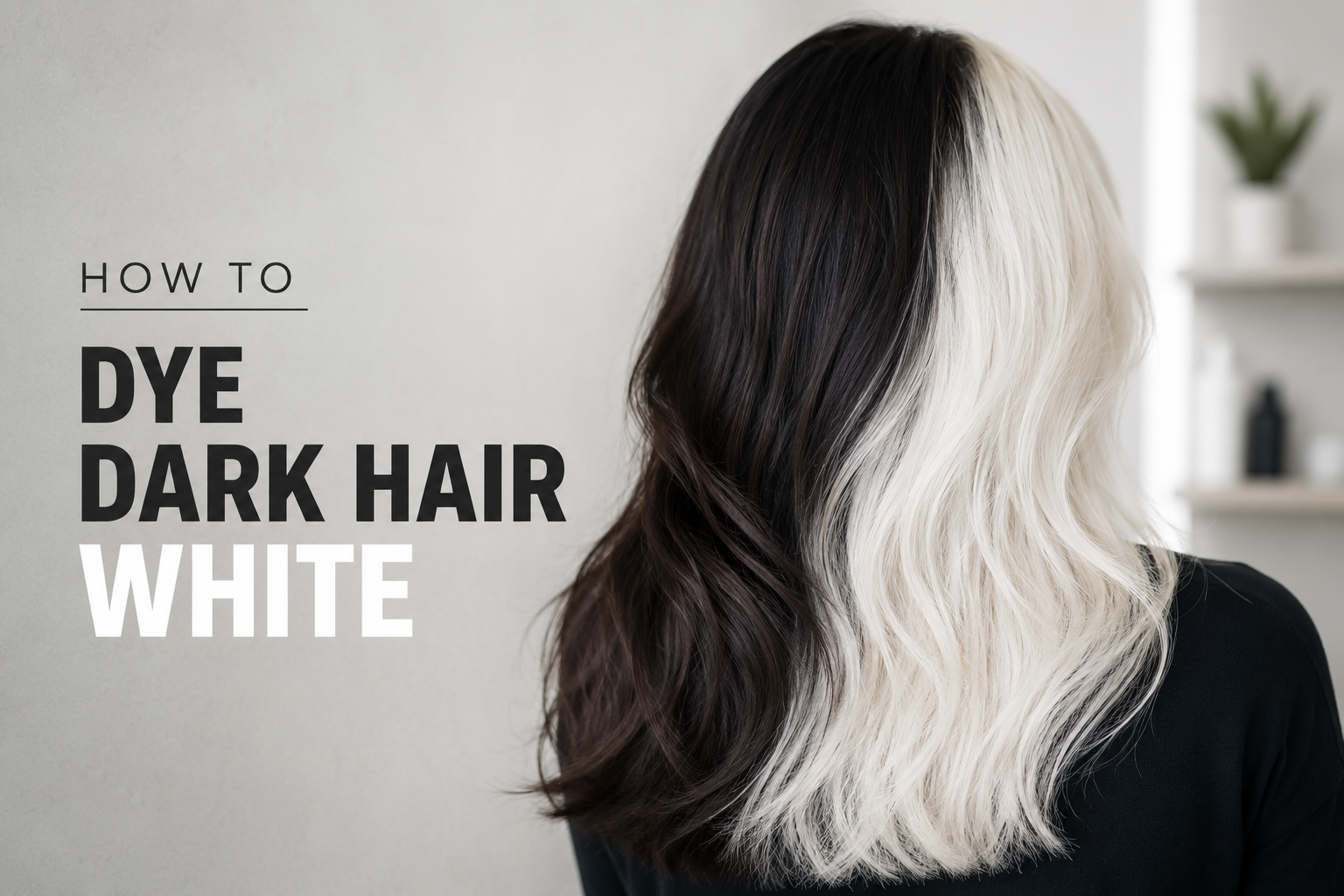
You bleached your hair. You rinsed it out. And instead of white, you got orange. Or yellow. Or something in between that looks nothing like the icy platinum you were aiming for.
Here’s the thing — that’s not a sign you did it wrong. It’s a sign you did exactly what dark hair does when bleach hits it. The problem isn’t the bleach. It’s the expectation that one session gets you to white. It doesn’t, and it never will.
Going from dark hair to white is a process that plays out over weeks, across multiple sessions, with a toner doing the final heavy lifting. If you’ve tried before and stalled out at orange or gold, this guide is for you. It covers every stage of the process, why your hair behaved the way it did, and exactly what to do next.
Quick Answer
Going from dark hair to white requires multiple bleach sessions spaced one to two weeks apart, followed by a toner to cancel remaining warmth. A single session on dark hair typically lifts it to orange or gold — not white. The full process takes two to six weeks depending on your starting depth. True white is not achievable without bleach, regardless of what some products claim.
Why Dark Hair Doesn’t Go White in One Session
This is where most first attempts go wrong — not in the technique, but in the expectation.
Dark hair contains two types of melanin. Eumelanin gives hair its dark brown and black tones. Pheomelanin sits underneath it and produces red, orange, and yellow warmth. When bleach breaks down the darker pigment, the warmer underlying tones are exposed — not removed.
Hair doesn’t lift from dark to white in one leap. It moves through a ladder of stages:
- Black
- Dark brown
- Brown
- Red-brown
- Red-orange
- Orange
- Gold
- Yellow
- Pale yellow
- Near-white
Each bleach session moves your hair a few rungs up that ladder. Dark brown or black hair typically sits at the bottom. One session gets you to orange or gold — stages six and seven. That’s not failure. That’s chemistry doing exactly what it should.
You need to climb the rest of the ladder before toner can take you to white.
What You Actually Need Before You Start
A realistic health check comes first. Bleach is an aggressive chemical process, and hair that’s already compromised — split ends, recent perms, relaxers, or overlapping permanent colour — is at serious risk of breaking. If your hair stretches more than 30% of its length when wet and doesn’t spring back, it’s too weak to bleach safely right now. Deep condition for two to four weeks, then reassess.
For dark hair at home, use 20-volume developer. Some sources push 30 or 40 volume for faster lift, but the damage risk rises sharply without professional oversight. Twenty volume lifts dark hair effectively across multiple sessions while keeping breakage manageable.
Run a strand test — every single time. Cut a small piece from an area that won’t show, bleach it, and watch what happens. It tells you exactly how your hair responds to that specific bleach at that specific developer strength.
Products to have ready:
- Bleach powder and 20-volume developer
- Blue toner (for orange hair)
- Purple toner such as Wella T18 (for yellow hair)
- Purple toning shampoo for maintenance
- Petroleum jelly for the hairline and ears
- Deep conditioning mask
- Sectioning clips
One more thing: don’t wash your hair one to two days before bleaching. The natural oils on your scalp create a thin barrier that reduces irritation and protects the hair shaft during processing.
How to Dye Dark Hair White — Session by Session
Session 1: The First Lift
Section your hair into three to five parts using clips. This isn’t optional — even coverage depends on working through clean, separated sections.
Apply the bleach mixture to mid-lengths and ends first. Leave roots for the final ten minutes. Roots process faster because the heat from your scalp accelerates the reaction, and applying it last evens out the result.
Check every five to seven minutes. Never exceed the processing time on the packet. When time is up, rinse thoroughly with cool water, apply a deep conditioning treatment, and leave it on for at least ten minutes before rinsing.
Your hair will be orange to gold. That is the expected result after session one on dark hair. Don’t tone it yet — you haven’t lifted enough for toner to do its job properly.
Wait a minimum of one week before session two. Two weeks is better. Your hair needs time to recover.
Session 2: Getting Past Orange
Follow exactly the same method as session one. You’re aiming to move from orange or gold to yellow or pale yellow.
If your hair is still showing strong orange after rinsing, a blue toner applied before the next bleach session will neutralise some of that warmth. Blue sits opposite orange on the colour wheel and cancels it out. Purple toner at this stage won’t do much — purple targets yellow, not orange.
Once you’re sitting at yellow or pale yellow, you’re ready to tone to white.
Session 3: The Final Lift (If Needed)
Dark brown and black hair almost always needs a third session. Some very dark hair needs a fourth.
Your target going into this session is pale yellow — a light, warm blonde that looks slightly brassy but not golden. That’s when toner can finally work effectively.
One warning: if your hair feels gummy, rubbery, or breaks when you gently stretch a strand, stop. Do not bleach again. Condition aggressively for two to three weeks before continuing. Pushing past that point causes severe breakage, and no colour result is worth that.
How to Tone Bleached Hair White
This is the step that does what most people think bleach is supposed to do.
Toner works by depositing small amounts of pigment to cancel unwanted warmth. It doesn’t lift — it neutralises. Which is why the lift has to be complete before toner goes on.
The right toner depends on where your hair is right now:
- Still orange? Use a blue toner or blue-tinted conditioner. Purple won’t touch orange effectively.
- Yellow or pale yellow? Use a purple toner. Wella T18 Lightest Ash Blonde is one of the most widely recommended at-home options for achieving a cool, near-white result.
Mix your toner according to the instructions and apply to damp, clean hair. Check every five minutes. Overtoning happens quickly — leave it too long and you’ll end up with a lavender or grey cast that can take weeks to fade.
Rinse with cool water, condition well, and check the result in natural light. One round of toning often isn’t enough. You may need to tone again after one to two weeks.
According to Schwarzkopf’s colour guidance, the violet pigments in purple toner cancel yellow tones through colour theory — the same principle hairdressers have used for decades to maintain blonde and white hair.
How to Dye Dark Hair White Without Bleach — The Honest Answer
The honest answer is that it’s not possible. Not to true white.
High-lift colour is sometimes marketed as a bleach alternative, but it only lifts four to five levels. Starting from dark brown, that gets you to a light golden blonde at best. Starting from black, you’ll barely move. Neither result can be toned to white.
Silver and white toning shampoos work only on hair that’s already very light — pale yellow at minimum. They deposit cool tone, they don’t lift colour.
If hair damage is your concern, the answer isn’t to skip bleach. It’s to slow down. Space sessions further apart, deep condition between them, and work with where your hair is rather than where you want it to be. As L’Oréal’s hair science team explains, the health of the hair structure matters more than speed when achieving dramatic colour changes.
Alternatives worth considering if damage is genuinely a barrier: white-blonde highlights blended with your natural base, balayage that builds toward white gradually over several appointments, or embracing a champagne or silver-toned blonde that requires less lift to achieve safely.
Aftercare: Keeping White Hair Healthy
White hair is bleached hair. It’s more porous, more fragile, and needs more maintenance than any other colour.
Purple shampoo is your most important maintenance tool — but use it one to two times per week, not every wash. Everyday use overtones white hair to grey or lavender surprisingly fast.
Weekly deep conditioning is non-negotiable. The bleaching process removes the natural protein and moisture bonds that give hair its strength. A keratin or protein mask once a week helps restore some of that structure.
Heat protection every single time. Bleached hair has a compromised cuticle that loses moisture rapidly under heat. No heat tool without a protectant spray, regardless of how quick the styling session is.
Hard water is a hidden enemy. Mineral deposits in hard water cause white and blonde hair to take on a yellow or brassy tint over time. A filtered shower head or a monthly clarifying treatment makes a noticeable difference.
Root touch-ups will be needed every four to six weeks as your natural colour grows in. Some people embrace the contrast; others prefer to maintain a seamless result.
When to Stop and See a Stylist
Some situations call for professional help, full stop.
If your hair is gummy, stretchy, or snapping off at any point, stop immediately. That’s a sign of serious structural damage and further bleaching will cause breakage that no treatment can reverse.
If your hair has previously been chemically relaxed, permed, or heavily coloured with a dark permanent dye, the risk of uneven lift and breakage increases significantly. A consultation with a colourist before attempting anything at home is genuinely worth the appointment cost.
A professional “bleach wash” — a diluted bleach application used to fade stubborn orange without a full re-bleach — is another option worth asking about if you’re stuck at a warmth level that sessions at home aren’t shifting.
The Takeaway
Getting dark hair to white takes time, patience, and a clear understanding of what each stage of the process is supposed to do. Multiple bleach sessions are normal — not a sign something went wrong. The toner you use matters as much as the bleach itself, and the right choice depends on whether you’re dealing with orange (blue toner) or yellow (purple toner).
Hair health between sessions is what determines whether you get there safely. Rush it, and you risk breakage. Work with the process, and white hair is genuinely achievable at home.
If you’re starting over after a previous attempt, begin with a strand test, assess your hair’s current health honestly, and give yourself two to six weeks to do it properly.
Frequently Asked Questions
How many bleach sessions does dark hair need to go white? Most dark brown hair needs two to three sessions. Black hair often needs three to four. Each session should be spaced one to two weeks apart to give the hair time to recover. The goal of each session is to move up the lifting ladder — from orange to gold to yellow to pale yellow — before toning to white.
Why did my hair turn orange after bleaching? Orange is the underlying warm pigment exposed when bleach removes the darker eumelanin from dark hair. It’s a normal stage in the lifting process, not a sign that bleach failed. You need to continue lifting through subsequent sessions until you reach pale yellow, then tone to neutralise the remaining warmth.
What toner should I use to make bleached hair white? Use a purple toner if your hair is yellow or pale yellow — Wella T18 Lightest Ash Blonde is a widely used option for near-white results. If your hair is still orange, use a blue toner first. Purple toner targets yellow tones only and won’t effectively neutralise orange.
Can I dye dark hair white without bleach? No. True white is not achievable on dark hair without bleach. High-lift colour only raises hair four to five levels — not enough to reach a pale enough base for white toning. Silver and white toning shampoos only work on hair that is already very light.
How do I maintain white hair once I’ve achieved it? Use a purple shampoo one to two times per week to prevent yellowing, deep condition weekly to restore moisture and strength, and apply heat protectant every time you use hot tools. Expect to touch up roots every four to six weeks. Hard water can cause brassiness — a clarifying treatment once a month helps.
You might also like: