



Best Sopa Criolla Near Me: Where to Actually Find It (and How to Tell If It’s the Real Thing)
A great bowl of sopa criolla has a rich beef-and-tomato broth, tender beef, al dente angel hair noodles, a
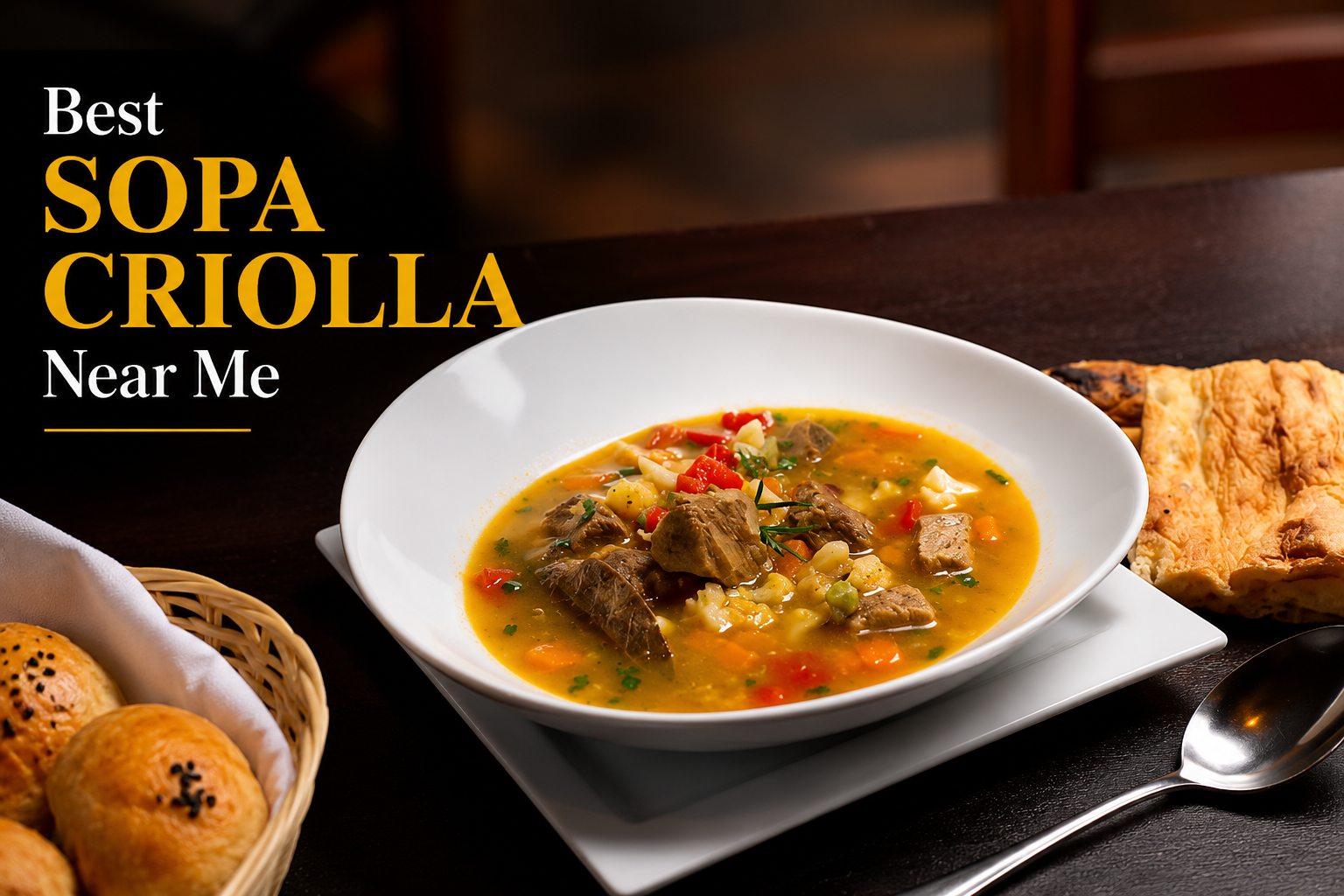
A great bowl of sopa criolla has a rich beef-and-tomato broth, tender beef, al dente angel hair noodles, a smoky depth from ají panca, and a smooth finish from evaporated milk — often topped with a fried egg and toasted bread. If a restaurant’s menu lists ají panca by name, that’s a strong sign the kitchen understands the dish.
Typing “best sopa criolla near me” into Google mostly gets you generic advice: check Yelp, read reviews, search for Peruvian restaurants. None of that is wrong, exactly. It’s just not enough to actually solve the problem, which is that this soup rarely shows up where you’d expect it to.
Restaurant Route vs. Homemade Route: The Quick Verdict
| Restaurant | Homemade | |
|---|---|---|
| Time investment | Minutes, if you find the right place | About 45 minutes |
| Cost | $12–$18 per bowl in most U.S. cities | Roughly $15–20 total for 4–6 servings |
| Authenticity odds | High, but only at dedicated Peruvian kitchens | Depends on sourcing real ají panca |
| Availability | Limited to specific metros | Anywhere with a Latin grocery store or online spice supplier |
If you live somewhere without a strong Peruvian food scene, skip ahead to the homemade section below — it’ll save you a lot of searching.
What Is Sopa Criolla, Exactly?
Sopa criolla is a Peruvian beef and angel hair noodle soup, rooted in Lima’s coastal home-cooking tradition rather than restaurant menus built for tourists. The broth starts with beef, simmers with tomato, onion, garlic, and ají panca, then gets a thin layer of noodles added near the end so they don’t turn mushy. Evaporated milk goes in last, rounding out the acidity with a bit of creaminess. Many versions finish with a fried egg on top and a slice of toasted or fried bread on the side.
Worth clearing up early: “criolla” doesn’t mean Louisiana Creole here. In Peru, “cocina criolla” refers to coastal, mestizo home cooking — a blend of Spanish, indigenous, and African culinary influences that developed in and around Lima. Colombian and Argentine kitchens use “criolla” too, but the dishes that come out of it look nothing alike. If your search results start mixing in Colombian sancocho or Argentine puchero, you’ve drifted into a different tradition entirely.
Why “Sopa Criolla Near Me” Doesn’t Work as a Direct Search
Google Maps and Yelp aren’t built to search by dish name with any real precision, and sopa criolla is niche enough that direct searches mostly come up empty or return general soup results with no connection to Peruvian cooking. A few approaches actually work better:
- Search “Peruvian restaurant near me” or “Latin American restaurant near me” instead of the dish name directly
- Filter OpenTable or Resy by Peruvian cuisine, then check full menus rather than trusting the preview
- Use delivery apps (DoorDash, Uber Eats, Grubhub) filtered specifically to Peruvian food
- Search Instagram and Facebook location tags for “sopa criolla” — home cooks and small kitchens post there more than they update Google listings
- Ask directly in city-specific Peruvian food groups on Facebook or Reddit; people who eat this regularly know faster than any review aggregator
Where Sopa Criolla Is Easiest to Find in the U.S.
Cities With the Strongest Peruvian Food Scenes
Peruvian food clusters where Peruvian immigrant communities are largest, not where “diverse dining” is a general selling point. That distinction matters. Queens, NY, and Paterson, NJ, both have dense, long-established Peruvian populations, and it shows in the number of Peruvian-specific kitchens rather than fusion menus with one token dish. The Washington, DC metro area, especially Northern Virginia, has a similar pattern. Los Angeles and Miami round out the list, both with sizable Peruvian populations and enough restaurant density that a search for “Peruvian restaurant” turns up real options instead of a single outlier.
Outside these areas, don’t assume nothing exists — Austin, Texas, for instance, has Lima Criolla Peruvian Restaurant, a dedicated Peruvian kitchen that shows up clearly in local restaurant directories. The lesson isn’t “only look in five cities.” It’s that a quick search for “[your city] Peruvian restaurant” plus a scan of the menu will tell you more than searching the dish name ever will.
What to Look For on a Menu
A restaurant serving sopa criolla well usually isn’t serving it alone. Look for lomo saltado, ají de gallina, papa a la huancaína, causa, and anticuchos on the same menu. A kitchen that’s built out that range understands Peruvian technique broadly, and that tends to carry over into how carefully they handle a soup that lives or dies on broth quality.
How to Tell If a Bowl Is the Real Thing
- Broth: rich and beef-forward, balanced by tomato acidity — not thin, not overly salty, not tasting like it came from a bouillon cube
- Noodles: angel hair, cooked al dente, added late enough that they hold their shape
- Ají panca: present as a smoky, earthy undertone, not overpowering and not missing entirely
- Finishing touches: evaporated milk for a light creaminess, frequently a fried egg and a piece of toasted bread
- Red flags: no ají panca mentioned on the menu or by staff, noodles described only as generic “pasta,” a bowl priced like a side dish rather than a full meal, or a “Latin fusion” menu with sopa criolla as the only Peruvian item on an otherwise unrelated list
Reading Reviews the Right Way
Star ratings alone won’t tell you much here — a 4.5-star Latin restaurant can still serve a version of this soup with none of the traditional components. Search reviews for specific language instead: “authentic,” “homemade,” “tastes like Peru,” or direct mentions of ají panca. If several reviewers independently mention the same dish by name, that’s usually a sign it’s a kitchen specialty rather than something buried on the menu and rarely ordered.
English-language review platforms sometimes miss the technical details that actually matter for this soup. Spanish-language review sites and Peruvian community forums tend to go into more specifics — broth consistency, whether the noodles turned mushy, whether the ají panca tasted real or substituted.
Can’t Find It Nearby? Here’s the Home Cook Fallback
If your area genuinely doesn’t have a Peruvian kitchen within reasonable distance, cooking it yourself is a realistic option — sopa criolla comes together in under an hour and doesn’t require unusual equipment. The one ingredient worth tracking down deliberately is ají panca, a mild, smoky red pepper paste that gives the broth its signature depth. Most Latin American grocery stores carry it, and it’s widely available through online spice retailers if a local store doesn’t stock it.
At a high level, the process runs: sauté onion, garlic, and ají panca until fragrant, brown ground or diced beef in the same pot, add stock and simmer until the flavors deepen, drop in angel hair noodles near the end so they don’t overcook, then stir in evaporated milk right before serving. Top with a fried egg and a piece of toasted bread if you want the traditional finish. For exact measurements and step-by-step timing, a dedicated Peruvian recipe blog will serve you better than a summary here — this guide is meant to point you toward what’s worth sourcing and why, not replace a full recipe.
Frequently Asked Questions
What does sopa criolla taste like? Savory and beef-forward, with a mild smokiness from ají panca, a touch of tomato acidity, and a light creaminess from evaporated milk stirred in at the end.
Is sopa criolla the same as Creole soup? No. Peruvian “criolla” refers to coastal, mestizo home cooking distinct from Louisiana Creole cuisine, and Colombian or Argentine dishes using the same word are unrelated in ingredients and preparation.
What is ají panca and can I substitute it? Ají panca is a mild, smoky Peruvian red pepper paste. Chipotle paste is the closest common substitute, though it changes the flavor profile slightly and lacks ají panca’s specific fruitiness.
Is sopa criolla available on delivery apps? Sometimes, though it depends entirely on whether a Peruvian restaurant near you has it on their online menu. Filtering by Peruvian cuisine on DoorDash, Uber Eats, or Grubhub is more reliable than searching the dish name directly.
How much should a bowl of sopa criolla cost? Most U.S. Peruvian restaurants price it between $12 and $18 as a full meal-sized portion, not a side dish.
Can I find sopa criolla outside major U.S. cities? Yes, though it takes more digging — check smaller cities’ Peruvian or Latin American restaurant listings directly rather than assuming it’s limited to a handful of metros.
Why do some restaurants’ versions taste so different from each other? Regional and family variations exist even within Peru — some cooks add potatoes for heartiness, others skip tomato paste, and spice levels vary by household. A different-tasting bowl isn’t necessarily a wrong one.