



Best Tarta de Acelga Near Me: How to Find It, How to Evaluate It, and What to Do When There’s None Around
There is a specific kind of hunger that tarta de acelga produces. Not the sharp, urgent kind — the
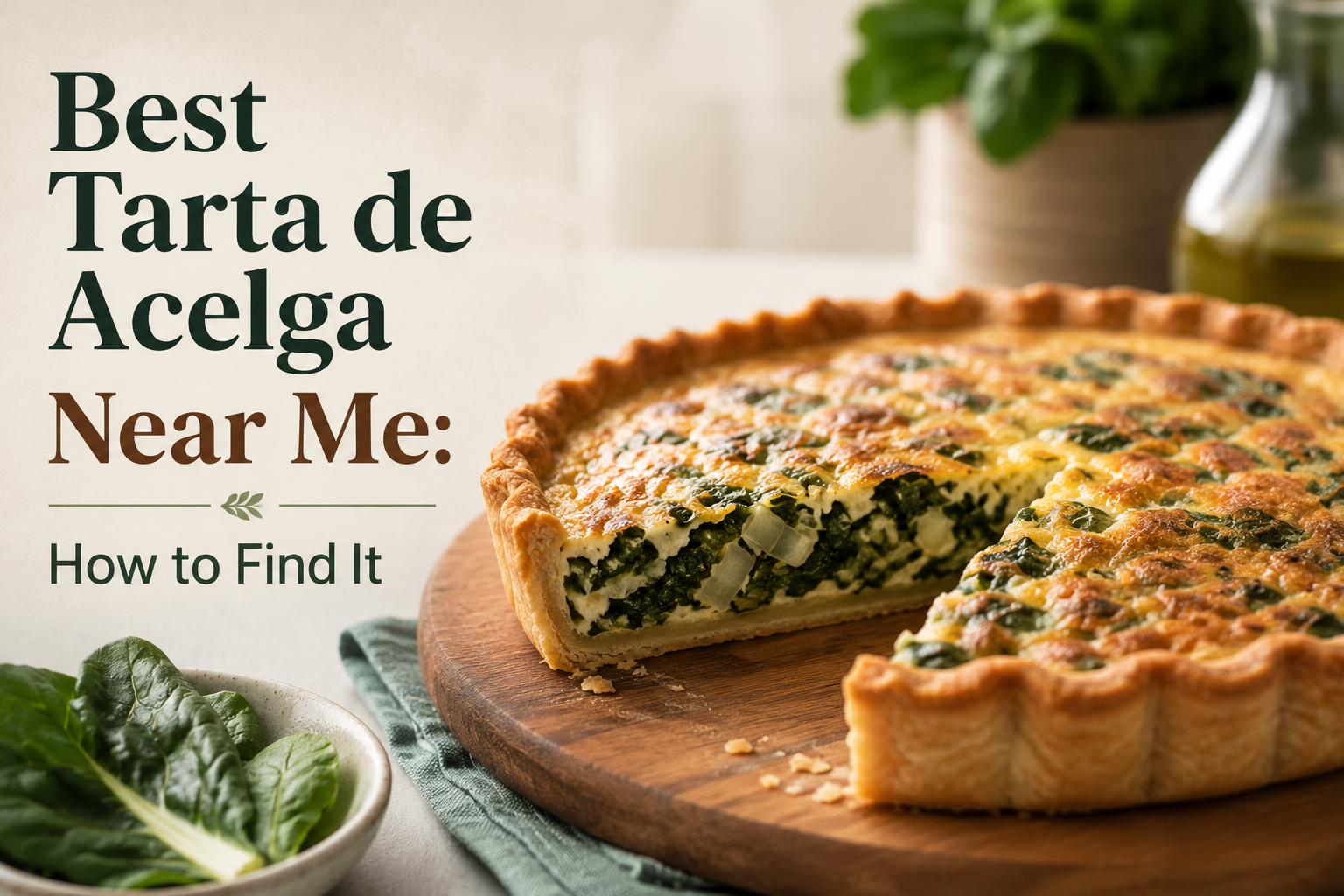
There is a specific kind of hunger that tarta de acelga produces. Not the sharp, urgent kind — the slow, warm pull toward something you have not eaten in a while and suddenly cannot stop thinking about. A golden-crusted savory pie, earthy from Swiss chard, rich from egg and cheese, satisfying in a way that most food simply is not.
If you have typed “best tarta de acelga near me” into a search bar, you already know what that pull feels like. And if you have followed the results and landed on an article telling you to “search Google Maps for Argentine bakeries,” you know how unhelpful most of those articles are.
This guide is different. It tells you exactly which search terms work on which platforms, how to evaluate what you find before you buy it, where in the world this dish has the strongest presence, and — critically — what to make at home when local options simply do not exist.
What Is Tarta de Acelga?
Tarta de acelga is a traditional Argentine and Uruguayan savory pie. The word acelga means Swiss chard in Spanish — a dark leafy green with a mild bitterness and earthy depth that forms the heart of the dish. Around that chard, the filling builds: eggs to bind it into something custardy and substantial, mild cheese for richness and salt, onion cooked until soft and sweet, and a pastry crust on top and bottom that turns golden and crisp in the oven.
It is not a sophisticated dish. That is not a criticism. It sits firmly in the category of everyday food — sold by the slice at neighborhood bakeries, packed for school lunches, served at weekday family tables. The quality ceiling is high and the ingredient list is short, which means the difference between a good version and a mediocre one comes down entirely to technique and freshness.
Taste it properly and you get layers: the slight bitterness of chard, the custardy weight of egg, the salt and fat of cheese, the sweetness of slow-cooked onion, and the satisfying crunch of a well-made crust. It tastes closer to a well-made quiche than to a sweet pie — substantial without being heavy, filling without being rich.
Where Tarta de Acelga Comes From
Every article about this dish mentions Liguria. Most stop there. The full story is more specific and more interesting.
The precise ancestor is the torta pasqualina — a deep Easter pie from the Liguria region of northern Italy, made with layers of paper-thin pastry, ricotta, Swiss chard, and whole eggs baked directly into the filling. When Ligurian immigrants arrived in Buenos Aires and Montevideo in the late 19th and early 20th centuries, they brought this tradition with them.
What happened next is what always happens when immigrant food meets a new place. Local cheeses replaced Italian ricotta. Fewer pastry layers replaced the elaborate multi-sheet construction. The Easter-specific ritual fell away and the dish became everyday food rather than celebration food. Swiss chard from South American markets, grown in a completely different soil and climate, gave the filling a slightly different character.
The result was not Italian food. It was something new — Rioplatense in character, rooted in the Río de la Plata culture shared between Argentina and Uruguay, carrying Italian DNA while tasting distinctly of its new home.
Understanding this matters for finding it. This dish does not live in Italian restaurants, Greek delis, or Mediterranean cafés — though all of those cultures have cousins of it. It lives in Argentine and Uruguayan establishments: the panadería (neighborhood bakery), the rotisería (casual takeaway shop), and the home kitchen. When you know what type of place to look for, you stop wasting time at the wrong doors.
How to Find the Best Tarta de Acelga Near You
Generic advice says: search Google Maps. Here is what actually works.
The Specific Search Terms That Work by Platform
On Google Maps: Type each of these separately and scan the results — combining them gives you broader coverage:
- “Argentine bakery”
- “Panadería argentina”
- “Rotisería”
- “Latin American bakery”
- “South American deli”
- “Tarta pascualina” (the alternate name used by many establishments)
On Yelp:
- “Swiss chard pie”
- “Savory chard tart”
- “Argentine pastry”
- “Empanada bakery” — many Argentine bakeries that sell empanadas also sell tarta; this search catches them when the tarta is not listed directly
On Google Search (not Maps): Search “[your city] Argentine community” to identify neighborhoods with established Argentine diaspora populations. That neighborhood is where the bakeries are. Then search “[that neighborhood] panadería” for the specific establishments.
On Instagram and TikTok: Search “tarta de acelga [your city].” Small Latin bakeries frequently post product shots on social media before they appear on delivery apps or get reviewed. A two-week-old Instagram post showing a golden tarta coming out of an oven is worth more than a three-year-old Yelp listing.
In Facebook community groups: Search “[your city] Argentine community” or “[your city] comida argentina.” These groups surface recommendations — and complaints — that never make it into formal reviews. A genuine community recommendation from someone who grew up eating this dish is the most reliable signal you can find.
What Type of Establishment to Look For
Argentine-owned panaderías are the most consistent source. They bake fresh daily, sell tarta alongside empanadas, facturas (Argentine pastries), and bread, and operate within the tradition that produced the dish. Uruguayan-owned establishments are equally reliable — the food cultures are nearly identical on this dish.
Peruvian restaurants sometimes serve pastel de acelga, a close cousin worth trying if no Argentine establishments are nearby. Mediterranean and Spanish delicatessens occasionally carry versions under different names.
What to avoid: generic Latin fusion restaurants that list tarta as a rotating weekly special. Consistency matters here. A dish made occasionally by a kitchen that does not specialize in it is rarely at its best.
Cities and Neighborhoods With the Strongest Presence
United States: Miami’s Doral neighborhood (sometimes called “Little Buenos Aires”) has the densest concentration of Argentine establishments in the US. Jackson Heights and Astoria in Queens, New York have strong Rioplatense communities. Los Angeles has Argentine-owned bakeries in Palms and Westwood. Houston and Chicago both have Argentine populations large enough to support dedicated establishments.
United Kingdom: London’s Elephant and Castle neighborhood has a significant South American community with Latin food culture embedded in its markets and small restaurants.
Spain: Madrid and Barcelona both have substantial Argentine immigrant communities. Argentine-style panaderías exist in both cities and serve tarta de acelga alongside other Rioplatense staples.
Australia: Melbourne’s St Kilda and Fitzroy areas and Sydney’s inner suburbs have Argentine-owned establishments serving this dish to diaspora communities.
General rule: look for cities with established Argentine diaspora populations. The dish follows the people. Where there is a community, there is a panadería. Where there is a panadería, there is tarta.
How to Evaluate a Tarta de Acelga Before You Buy
Nobody tells you this part. Here is what separates an excellent slice from a forgettable one.
What a Great One Looks Like
Crust color: Deep golden — not pale, not blonde, not barely-browned. Pale crust means undercooked pastry and almost certainly a soggy bottom layer. Deep even gold means the oven was at the right temperature and the tarta was given enough time.
Crust structure when lifted: A good slice holds its shape when you pick it up. The bottom crust is firm enough to support the filling without bending or collapsing. If the slice droops immediately, the crust is either underbaked or has absorbed moisture from a wet filling.
Filling color: Rich, dark green from the chard — vibrant and clean. Grey or dull green filling indicates overcooked chard, old chard, or both. Bright green is the visual signal of fresh, properly handled greens.
Fill depth: At least 3 to 4 centimeters of filling. A shallow tarta is a stretched tarta — the filling was made in insufficient quantity and the ratio of crust to filling is off. A generous filling layer is what makes this dish satisfying.
Freshness question: Ask when it was baked. Same-day is ideal. Day-old is acceptable — tarta de acelga actually holds up well overnight. Two-day-old chard filling begins to lose its flavor and the crust starts to soften from moisture absorption.
Red Flags to Avoid
Water pooling on the cut surface: Means the chard was not adequately squeezed before it went into the filling. Excess moisture makes the filling watery and the crust soggy — the most common technical failure in home-made and poorly-made commercial versions.
Very pale or doughy crust: Underbaked. The filling may taste fine but the textural contrast — which is half of what makes this dish satisfying — will be absent.
Excessive cheese masking the chard: The chard should lead. Cheese provides richness and salt; it should not overwhelm the green. A filling that tastes primarily of melted cheese with some green flecks in it has the balance wrong.
No indicated freshness date on packaged versions: If you are buying from a deli case or supermarket, check whether there is any freshness information. Pre-packaged tarta with no date is a risk.
Regional Variations — Not All Tarta de Acelga Is the Same
This is the section most articles skip entirely, and it matters if you are eating across different communities or trying to understand why versions you have tried taste different.
Argentine (Classic Rioplatense)
Two-crust construction, sealed with a simple crimp or fold. Filling uses chard, egg, mild cheese (mozzarella or cuartirolo — a soft, fresh Argentine cheese), and cooked onion. Cheese is mild and recessive; chard leads. Served at room temperature by default — this is not a serving shortcut, it is tradition.
Uruguayan
Very similar to Argentine but typically includes more egg in the filling, producing a denser, more custardy texture when sliced. Uruguayan dairy products have a distinct flavor profile from Argentine equivalents, which gives the cheese component a slightly different character. Served at room temperature in the same panadería and rotisería format.
Peruvian (Pastel de Acelga)
Closer to the Ligurian original — often includes ricotta, sometimes features more herbs (parsley, fresh basil) than the Argentine version. More likely to appear in Italian-Peruvian family kitchens than in commercial bakeries. Richer and creamier than the Rioplatense versions.
Gibraltarian and Spanish (Torta de Acelgas)
The Gibraltarian version has its own distinct culinary tradition influenced by British and Mediterranean crossover. Spanish versions vary by region — Andalusian versions tend toward olive oil-based crusts rather than butter-enriched pastry. Both are less common outside specialist establishments but worth seeking out as interesting variations on the same theme.
What to Do When There Is No Tarta de Acelga Near You
Some searches genuinely come up empty. There is no Argentine bakery within reasonable distance, the nearest one does not carry it that day, or you are in a city without the right diaspora population to sustain the demand.
Make it. The home version is genuinely excellent and more straightforward than most pastry dishes.
The Simplified Home Method
Pastry: Use store-bought pie dough or, if you can find them, tapas para tarta — Argentine-specific pre-rolled pie crusts sold at Latin food stores and some supermarkets. Store-bought dough saves the most time without meaningfully compromising the dish.
Chard preparation: This step matters more than any other. Wash the chard thoroughly — it carries grit in its leaves, and biting into sand ruins the dish. Remove the ribs entirely. They release large amounts of water during baking and will make your filling wet and your crust soggy. Blanch the leaves briefly in boiling salted water, then transfer immediately to cold water to stop cooking. Squeeze aggressively in a clean kitchen cloth — squeeze more than you think you need to, then squeeze again. The chard should feel almost dry.
Filling: Sauté one large onion in olive oil over medium heat until soft and translucent — about eight minutes. Add the squeezed chard and cook together for two minutes. Remove from heat. Stir in three eggs, 200 grams of mild cheese (ricotta, mozzarella, or cottage cheese), salt, black pepper, and a pinch of fresh nutmeg. Taste and adjust.
Assembly: Grease a round pie dish and line it with the bottom crust, pressing gently into the corners. Add the filling in an even layer. Cover with the top crust, pressing the edges together to seal. Crimp the edge. Cut two or three small slits in the top for steam to escape. Brush with beaten egg for color.
Bake: 375°F (190°C) for 35 to 40 minutes until the crust is deeply golden. Do not underbake.
Rest: Leave it for at least 20 minutes before cutting. The filling sets as it cools and slices cleanly rather than spilling. This resting period is what produces the neat, photograph-worthy slice — and it moves the serving temperature toward the traditional room-temperature presentation.
When Swiss Chard Is Unavailable
Frozen chopped spinach: The most practical substitute. Thaw completely and squeeze out every drop of moisture before using — frozen spinach holds significantly more water than blanched chard.
Fresh spinach: Use double the volume of chard as a starting point; spinach cooks down more aggressively.
Kale: Stronger, more assertive flavor than chard. Remove tough stems, blanch, squeeze. The result is less traditional but genuinely good.
Silverbeet: Essentially the same plant as Swiss chard under a different name in some countries. Direct substitute, no adjustment needed.
Serving, Storing, and Reheating
Serving temperature: Room temperature is traditional and correct. In Argentine panaderías, tarta sits on the counter after baking, not under a heat lamp. This is intentional — the filling texture and the pastry both perform best when the internal temperature settles.
Warm serving: Entirely acceptable and popular outside South America. Reheat in an oven at 325°F (160°C) for 10 to 12 minutes. This restores the crust’s texture without cooking the filling further.
Microwave reheating: Works for flavor, not for texture. The crust softens. Fine if texture is not a priority; not fine if it is.
Storage: Refrigerate covered for up to three days. The filling’s flavor improves slightly on day two as the ingredients settle together. This is a dish that genuinely gets better overnight, which makes it ideal for advance preparation.
Freezing: Freeze the fully baked and cooled tarta, wrapped tightly in plastic and foil, for up to two months. Thaw overnight in the refrigerator. Reheat in the oven — not the microwave — to restore crust texture.
Portion size: In Argentina, a standard portion is a quarter of a round tarta — generous, thick, complete as a meal. In delis and bakeries outside South America, portions are sometimes smaller. If in doubt, order more than you think you need.
People Also Ask: Quick Answers
What is tarta de acelga? A traditional Argentine and Uruguayan savory pie made with Swiss chard, eggs, cheese, onion, and a flaky golden pastry crust. It descends from the Ligurian torta pasqualina, brought to South America by Italian immigrants in the late 19th century. Served at room temperature or warm, cut in thick slices.
Where can I find tarta de acelga near me? Search Google Maps for “Argentine bakery,” “panadería argentina,” or “rotisería.” On Yelp, try “Swiss chard pie” or “tarta pascualina.” Look specifically for Argentine or Uruguayan-owned establishments, or use Instagram and Facebook community groups to surface local recommendations not yet on formal review platforms.
What does tarta de acelga taste like? Earthy and slightly bitter from the chard, rich and custardy from egg and cheese, savory-sweet from cooked onion, with a crumbly, tender crust providing contrast. Closer to a well-made quiche than to a sweet pie. Satisfying and filling without being heavy.
What is the difference between tarta de acelga and torta pasqualina? Torta pasqualina is the Ligurian Italian ancestor — made at Easter with ricotta, whole eggs baked into the filling, and many thin pastry layers. Tarta de acelga is the South American everyday evolution: simpler construction, local cheeses, no Easter-specific ritual, served year-round. Same root; distinct dish.
Can I make tarta de acelga at home? Yes. The filling uses Swiss chard, eggs, onion, and mild cheese. Store-bought pie dough handles the pastry. The critical technique is squeezing all moisture from the blanched chard before it goes into the filling. The whole process takes about 30 minutes of active work plus 40 minutes of baking.
How do you reheat tarta de acelga? Best in an oven at 325°F (160°C) for 10 to 12 minutes, which restores crust texture. Microwave reheating works for flavor but softens the crust. Traditional Argentine serving is at room temperature — reheating is optional, not required.