




Reform UK at 25%: Is Nigel Farage’s Party Really on Course to Change British Politics?
Something remarkable is happening in British politics. A party that won just five seats in parliament less than two
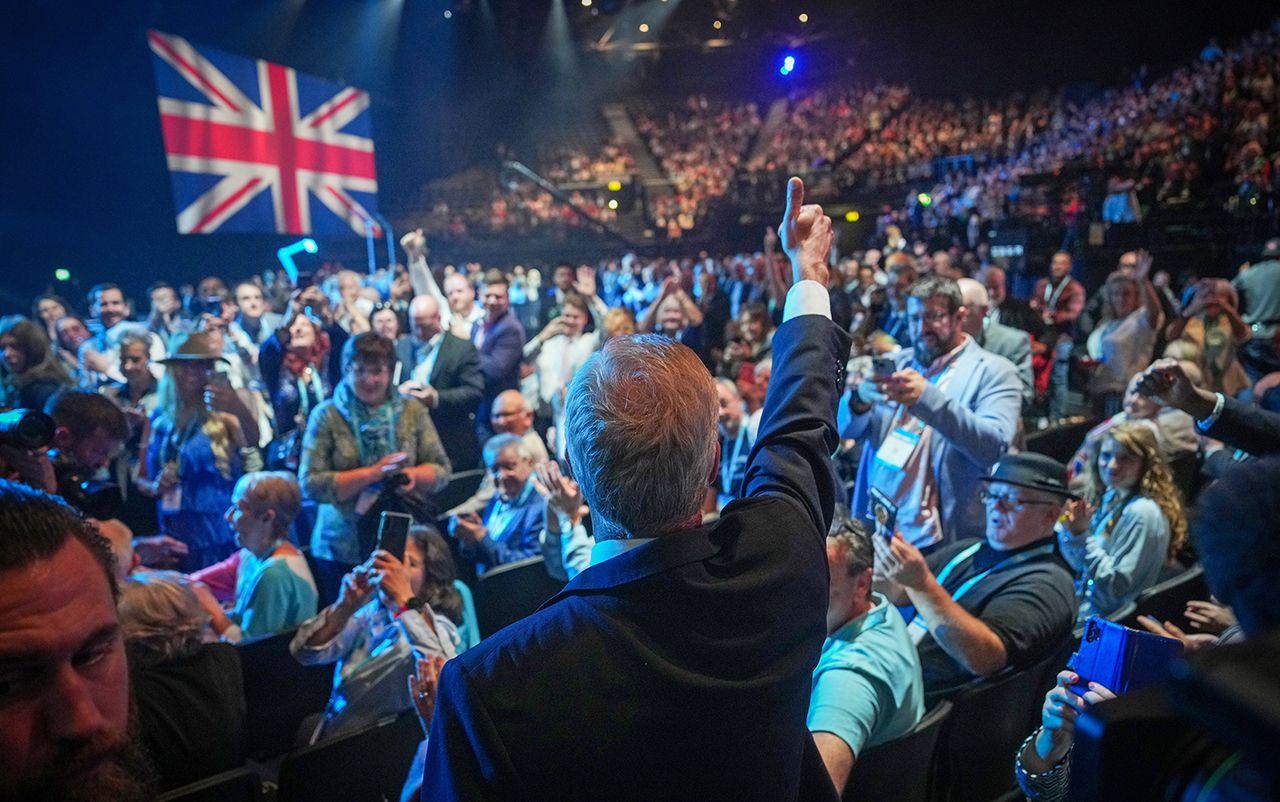
Something remarkable is happening in British politics. A party that won just five seats in parliament less than two years ago is now leading every major opinion poll in the country — by a significant margin.
The latest YouGov voting intention poll for The Times and Sky News shows Reform UK leading on 25% of the vote, six points ahead of any other party. Labour and the Conservatives are tied at 19% each. The Greens are on 14%. The Liberal Democrats trail on 12%.
For anyone who has followed British politics for the last decade, these numbers are extraordinary. The two-party system that has dominated Westminster for over a century is fracturing — and Nigel Farage is the man holding the hammer.
How Did We Get Here? The Rise of Reform UK
Reform UK is not a new party — but it is a party that has been completely transformed. Founded as the Brexit Party in 2018, it was built around one issue: leaving the European Union. Once Brexit was delivered, the party seemed to have exhausted its purpose.
Then Nigel Farage came back.
Farage has a particular kind of charisma that appeals to older voters of a certain demographic. With Reform itself, before the 2024 general election, its polling figures only began to rise when Farage announced that he was coming back to stand for the party in Clacton. It was his eighth attempt to become an MP — and it worked.
Reform won five seats in the 2024 general election and took 14% of the national vote — a strong result for a party with no government experience and limited resources. But that was just the beginning.
Since Labour won power in July 2024 under Keir Starmer, Reform’s polling numbers have climbed steadily month after month. After winning 33.7% of the vote in the 2024 election, Labour was polling at just 24% in April 2025, only slightly ahead of Reform UK on 23%. Within a year of taking office, the governing party had lost nearly a third of its electoral support.
By June 2026, Reform had overtaken everyone.
The May 2026 Local Elections: A Seismic Moment
If polling numbers were one warning sign for the establishment parties, the May 2026 local elections were a full-scale alarm.
The hard-right Reform UK party led by Nigel Farage surged in England’s local elections while the governing Labour Party slumped, deepening doubts about Prime Minister Keir Starmer’s ability to govern and further splintering Britain’s traditional two-party political system.
Early results showed Reform UK gaining more than 1,000 council seats across the country, while Labour had lost more than 900. The Conservatives fared no better — the Conservative Party lost control of six councils and over 400 seats.
Farage himself called it a turning point. Reform UK leader Nigel Farage heralded a “historic shift in British politics” in a speech in the English town of Romford. He insisted his party was no longer a protest vote but a “truly national party” that was “here to stay.”
The numbers backed him up. Farage stated that Reform is able to “win in areas that have always been Conservative, but equally, we’re proving in a big way, we can win in areas that Labour have dominated, frankly, since the end of World War I.”
UK Voting Intention 2026: The Current Polling Breakdown
| Party | YouGov (June 7–8, 2026) |
|---|---|
| Reform UK | 25% |
| Conservative | 19% |
| Labour | 19% |
| Green | 14% |
| Liberal Democrats | 12% |
What makes these UK election polls particularly striking is the collapse of both traditional parties simultaneously. Reform is not just winning over disaffected Conservatives — it is pulling voters from Labour heartlands that have not voted Tory in living memory.
Reform was the most popular party for the two oldest age groups, with 34% of 50-to-64-year-olds intending to vote for them, along with 33% of those aged 65 or over. These are the age groups with the highest turnout at general elections — a critical advantage.
What Does This Mean for the Next UK General Election?
The next UK general election is not required until 2029 — but the polling projections being modelled now paint a dramatic picture.
The first MRP of 2026 conducted by More in Common projected Reform UK winning 381 seats, with a majority of 112, more than all other parties combined. Labour is projected to fall to just 85 seats — a 326-seat loss from the last election.
A later MRP poll told a slightly different story. An April 2026 poll by Electoral Calculus predicted Reform would secure 188 seats while the Conservatives would win 159 and Labour just 86. On these figures, the most likely outcome would be a Reform and Conservative coalition with Nigel Farage as Prime Minister.
Reform UK, which will mount a serious challenge to Labour in the next UK general election expected to be held by 2029, academics say will “understandably celebrate these results,” according to James Mitchell, a professor at the University of Edinburgh’s School of Social and Political Science.
Three years is a long time in politics. But the trajectory is unmistakable.
Why Is Reform UK Growing So Fast?
Several forces are converging to drive Reform UK polls upward.
Labour’s broken promises. Starmer won a landslide in 2024 promising change. Two years in, many voters feel that change has not arrived. Tony Travers, a professor of politics at London School of Economics, explained that “the Labour government has been in office for nearly two years now, and has suffered significantly from falls in its opinion poll ratings, both for the party and for its leader, Prime Minister Keir Starmer.”
Immigration. Reform’s core message — stricter border control, reduced migration — resonates powerfully with a large section of the British public. The continued arrival of small boats crossing the Channel has kept this issue at the top of the political agenda throughout Labour’s time in government.
Cost of living. Household finances remain stretched across the UK. Inflation, energy costs, and high mortgage rates have created persistent economic anxiety that the government has not yet managed to ease.
Farage’s personal brand. Reform’s polling figures consistently rise when Farage is front and centre. His charisma and ability to draw together political energies have no equivalent elsewhere in British politics. He is the party’s greatest asset — and its greatest risk, since so much depends on him personally.
The collapse of the Conservative brand. Traditional right-wing voters have nowhere to go. The Conservatives are polling at historic lows. Reform has positioned itself as the natural home for anyone who wants a right-wing government but has lost faith in the Tories.
Reform UK in the Context of European Right-Wing Populism
Britain’s political shift does not exist in isolation. Across Europe, right-wing populist parties are surging — and Nigel Farage 2026 sits squarely within this broader movement.
Across Europe, populist parties have seen a surge in support, including Alternative for Germany (AfD), Brothers of Italy (Fratelli d’Italia), and Law and Justice in Poland. While not a unanimous shift, the continental trend towards populism remains clear.
Reform UK shares several characteristics with these movements — anti-establishment rhetoric, hard-line immigration positions, scepticism of international institutions, and a strong connection to Donald Trump’s political brand. Farage and Trump have been openly allied for years, and this transatlantic connection has become a defining feature of Reform’s identity.
With seven viable political parties, Britain could be moving towards fragmentation — possibly pointing toward a razor-thin Reform landslide in 2029. The era of two-party dominance appears to be ending.
Can Anyone Stop Reform?
The honest answer, based on current data, is: not without significant change.
Labour needs to demonstrate meaningful progress on the issues that matter most to voters — particularly immigration, the NHS, and economic living standards — before the next election. Without that, the party faces the prospect of a catastrophic result in 2029.
The Conservatives face an even harder task. They are squeezed between Reform on the right and a potential recovery by Labour. Some Conservative figures have responded by adopting increasingly hardline positions in an attempt to win back Reform voters — a strategy that risks alienating moderate voters without necessarily winning back committed Farage supporters.
Reform itself faces its own challenges. Electoral Calculus founder Martin Baxter noted that Nigel Farage faces the challenge of holding on to voters who are drifting back to the Conservatives on his left, while others may shift to a new right-wing alternative called Restore Britain. If fragmentation on the right increases, Reform could face similar challenges to those Labour has experienced due to vote splitting on the left. Electoral Calculus
A movement that rises fast can also fall fast. The question is whether Reform has built a genuine political infrastructure — council seats, local activists, candidate pipelines — or whether it remains primarily a vehicle for one man’s ambitions.
The May 2026 elections suggest it may be becoming both.
Frequently Asked Questions
What is Reform UK’s current polling? As of June 7–8, 2026, Reform UK leads UK voting intention polls at 25%, six points ahead of both Labour and the Conservatives who are tied at 19%.
Who leads Reform UK? Nigel Farage has been the leader of Reform UK since returning to front-line politics ahead of the 2024 general election. He is the MP for Clacton, Essex.
Could Reform UK win the next UK general election? Multiple MRP seat projections in 2026 suggest Reform would be the largest party if a general election were held now. Whether they could win an outright majority is less certain — a coalition with the Conservatives is the most likely route to government under current polling.
When is the next UK general election? The next UK general election is expected to be held by 2029 at the latest. Keir Starmer’s Labour government could call one earlier, but given current polling, that seems unlikely.
Why is Reform UK so popular in 2026? The combination of Labour’s policy disappointments, continued pressure on immigration, the cost of living crisis, the collapse of the Conservative brand, and Nigel Farage’s personal appeal have all combined to drive Reform’s polling surge.
Conclusion
British politics is being reshaped in real time. The UK voting intention 2026 data tells a clear story — two parties that have dominated Westminster for generations are both polling at historically low levels, while a party that barely existed a decade ago leads every major poll in the country.
Whether Nigel Farage can convert polling dominance into parliamentary power remains the central question of British politics heading into the second half of the decade. The 2026 local elections proved Reform is no longer a protest movement. The next UK general election will determine whether it becomes a government.
What is certain is that the old rules no longer apply. Britain’s political landscape has changed — and Reform UK is the reason why.