

How to Clean Blinds: UK Guide for Every Type (2026)
Dusty blinds making the room look tired? Here's how to clean venetian, vertical and wooden blinds fast — without
Blinds are the one job everyone puts off. They hang there quietly collecting dust for months, and then one bright morning the sun hits them and — horror — you can see every speck. The good news: cleaning blinds is genuinely quick once you know which method suits your blind type. Most need nothing more than a microfibre cloth, warm water and a drop of washing-up liquid.
Whole-home cleaning spree? Here’s how to clean white trainers — leather, canvas, mesh and suede, plus how to whiten soles and fix yellowing.
Related guide: how to clean inside of a conservatory roof.
Last updated: 22 October 2026
What you’ll need
- Dry microfibre cloth or duster
- Vacuum cleaner with a soft brush attachment (on low suction)
- Warm water and a few drops of washing-up liquid
- White vinegar (for greasy kitchen blinds)
- An old cotton sock (genuinely — it makes the best blind-cleaning mitt)
- A dry towel and, optionally, rubber gloves
You don’t need a specialist blind cleaner. The bottles sold as such are mostly diluted detergent anyway, so the cheap cupboard staples below will do the same job.
Cleaning blinds without taking them down
You almost never need to remove blinds to clean them. The golden rules are simple: start at the top and work down, support each slat with your other hand so it doesn’t bend, and use a damp (not soaking) cloth. Too much water is the main way people damage blinds — especially wooden ones.
Venetian and aluminium blinds
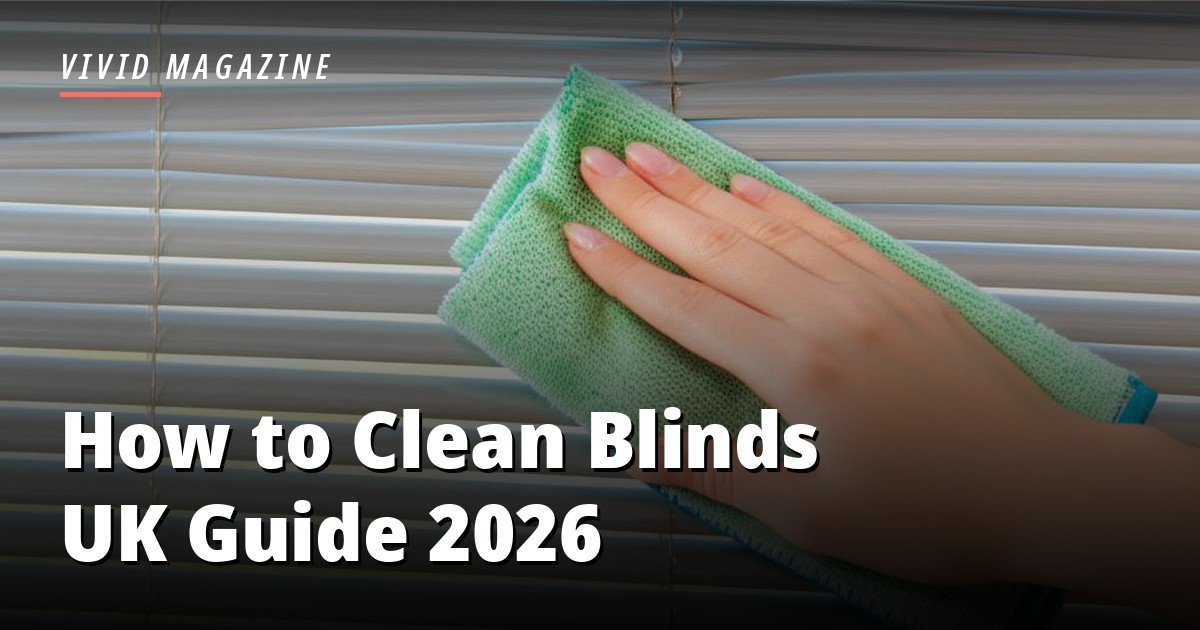
Lower the blinds fully and tilt the slats to an almost-closed position, leaving a small gap so you can reach each slat. Dust both sides with a dry microfibre cloth or the vacuum brush attachment, flipping the slats halfway through so you get both faces.
For grime that dusting won’t shift, mix warm water with a few drops of washing-up liquid and wring your cloth out well. The sock trick works brilliantly here: put the sock on your hand like a puppet, dampen it, and grip each slat between thumb and forefinger, wiping top and bottom in one pass. Rinse the sock often and finish with a dry cloth so no water sits on the slats.
Kitchen blinds often carry a film of cooking grease. Wipe these with a cloth wrung out in a 50/50 mix of white vinegar and warm water, then dry straight away. If your blinds sit right above the hob and grease keeps building up, it’s worth pairing this with a proper kitchen blitz — cleaning the air fryer and wiping down the extractor on the same day stops the grease from drifting back.
Vertical blinds
Vertical blinds are the easiest of the lot because the slats don’t trap dust the way horizontal ones do. Start with the dry method: run a lint roller or a dry microfibre cloth down each slat, top to bottom. For fabric or PVC vertical slats, a vacuum with the brush attachment on low suction gets into the edges where dust gathers.
For a deeper clean, wipe each slat down its full length with a cloth dampened in warm soapy water, then follow with a second cloth dampened in plain water to rinse. Lay an old towel underneath first — vertical blinds usually hang over carpet or flooring that doesn’t appreciate soapy drips. Avoid soaking fabric vertical blinds; a light wipe is enough.
Wooden and faux-wood blinds
Real wood blinds and water are a bad combination — too much moisture can warp, stain or dull the finish. Stick to dry methods: a microfibre cloth, a duster, or the vacuum brush attachment on the lowest setting. Work top to bottom, tilting the slats both ways.
If wooden slats need more than dusting, use a cloth that’s barely damp and dry each slat immediately afterwards. Skip the vinegar mix on real wood — its acidity can mark the finish. Faux-wood blinds are more forgiving and can be wiped with the same soapy-water method as aluminium, but wring the cloth out well regardless.
Fabric and roller blinds
Dust roller blinds with a dry microfibre cloth while they’re fully extended. For spot marks, dab — don’t rub — with a cloth lightly dampened in warm water with a drop of washing-up liquid, and test an inconspicuous corner first. Cellular or honeycomb blinds collect dust inside the cells; a hairdryer on the cool setting, blown gently across the surface, puffs the dust out without touching the fabric.
How often should you clean blinds? (a quick schedule)
| Blind type | Quick dust | Deep clean |
|---|---|---|
| Venetian / aluminium | Every 2 weeks | Every 6 months |
| Vertical | Monthly | Every 6 months |
| Wooden | Every 2 weeks (dry only) | As needed (dry only) |
| Fabric / roller | Monthly | Spot-clean as needed |
A quick dust takes under ten minutes per window — less time than it took you to notice the dust in the first place. The trick is routine: dust blinds whenever you dust the windowsill, and the deep clean never becomes a daunting job.
When blinds need more than a wipe
Extremely grimy metal or vinyl blinds — the kind you inherit with a new flat — can be deep cleaned in the bath. Lay them flat in lukewarm water with a squirt of washing-up liquid, let them soak for 20–30 minutes, then wipe each slat with a soft cloth. Rinse with clean water and dry thoroughly before rehanging. Never do this with wooden, fabric or cellular blinds.
Stubborn marks on white plastic blinds sometimes respond to a paste of bicarbonate of soda and water, applied gently with a soft cloth and rinsed off. Avoid abrasive scouring pads and bleach-based sprays on coloured or coated slats — they can strip the finish and leave patchy marks.
Mistakes to avoid
- Soaking the blinds — a dripping cloth is the number one cause of warped wood and water-spotted finishes.
- Cleaning bottom-up — dust falls downwards, so you’ll redo your own work.
- Using harsh chemicals on coloured slats — bleach and strong sprays can discolour coatings.
- Forcing stiff cords — if blinds don’t raise smoothly, clean the headrail and cords gently rather than yanking them.
The allergy angle
If anyone in the house has hay fever or dust allergies, blinds deserve more frequent attention — they’re dust traps, and every tilt of the slats sends fine particles into the room. Dusting bedrooms more often makes a noticeable difference, especially if you’re already investing in the sleep environment — our guide to the best silk pillowcases covers another easy bedroom upgrade for sensitive sleepers.
Pair it with your other deep-clean jobs
Blind cleaning fits naturally into a seasonal home reset. Tackle it on the same weekend you defrost the freezer — both are jobs that pay off for months and feel satisfyingly “done” once they’re finished. And if you’re worried about your nails surviving a cleaning marathon, removing gel polish safely at home is worth reading before you pull the rubber gloves on.
FAQ
Can you clean blinds without taking them down?
Yes — in almost every case. Dust, vacuum or wipe slats in place, working top to bottom and supporting each slat as you go. The only exception is heavily grimy metal or vinyl blinds, which can be soaked in a bath for a deeper clean.
What’s the best way to clean wooden blinds?
Keep them dry. Use a microfibre cloth, duster or vacuum brush attachment on low suction. If a spot needs wiping, use a barely-damp cloth and dry the slat immediately — water can warp real wood and dull its finish.
How do you clean vertical blinds?
Dust each slat top to bottom with a dry cloth, lint roller or vacuum brush attachment. For a deeper clean, wipe each slat with a cloth dampened in warm soapy water, then rinse with a cloth dampened in plain water. Protect the floor underneath with a towel.
How often should you clean blinds?
Quick-dust horizontal blinds every couple of weeks and vertical blinds monthly; deep clean both roughly twice a year. Wooden blinds need dry dusting every two weeks but shouldn’t be deep cleaned with water.
Can I use white vinegar on blinds?
On aluminium, vinyl and PVC blinds, yes — a 50/50 mix of white vinegar and warm water cuts through grease well. Avoid it on real wooden blinds, as the acidity can mark the finish.
Related: If your whole bedroom needs a refresh, see our guide on how to clean a mattress.
Cleaning beyond the windows? Our guide to how to clean a resin driveway covers safe jet washing and moss removal without damaging the surface.
Last updated: 22 October 2026
Also in our Home cleaning guides: How to Clean Pewter Tankards (UK Guide)
Chalk dust gets everywhere — if you have a board at home, our guide to cleaning a chalkboard properly covers every board type and method.
If your wardrobe needs the same care as your windows, our guide to how to clean a blazer covers dry cleaning, hand washing, spot cleaning and steaming.