

How to Clean Limestone Safely: UK Guide That Works
Limestone is beautiful — and easy to ruin with the wrong cleaner. This UK guide covers safe cleaning, stain
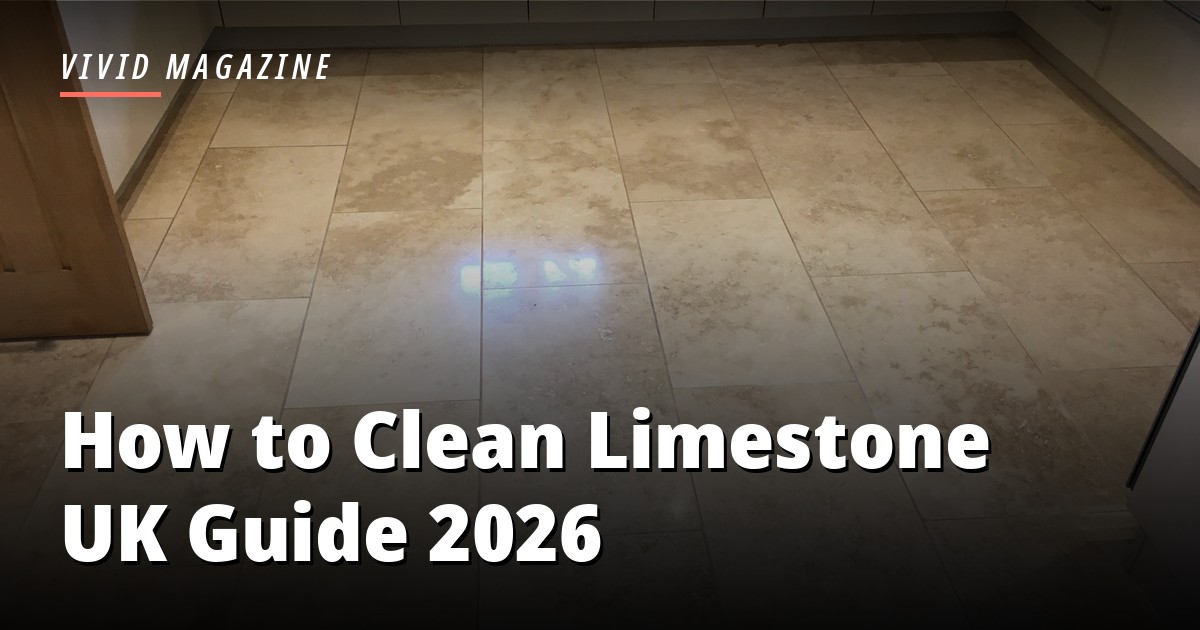
Limestone looks effortless — warm, pale, quietly expensive. Keeping it that way takes a little more care than most surfaces demand, because an ordinary bottle of bathroom cleaner can permanently damage it. Get the basics right, though, and it is not a difficult stone to live with. This guide covers safe everyday cleaning, what never to use, stain removal by type, sealing, and indoor versus outdoor differences.
What limestone is — and why it needs gentle handling
Limestone is a sedimentary rock made mostly of calcium carbonate, and that single fact explains almost everything about cleaning it. Calcium carbonate reacts with acids, so anything acidic etches the surface — eating away a microscopically thin layer and leaving a dull patch that cannot simply be wiped away. Unlike a surface stain, an etch mark is damage to the stone itself, usually fixable only by professional honing or polishing.
Limestone is also porous, though the degree varies — dense, honed stone absorbs far less than a rough, open-textured flag. Spills soak in rather than sitting on top, which is why sealing matters, why spills should be dealt with promptly, and why dirty mop water left to dry can leave grime in the pores. Because colour, density and finish differ between quarries, always test a new product on a small, hidden patch first.
What never to use on limestone
This is the list that saves you from the most common and most expensive mistake:
- Acidic cleaners — vinegar, lemon juice, limescale removers, brick cleaners, cement removers and most descalers. The very products sold to dissolve limescale will dissolve your limestone too, since both are calcium carbonate. Our guide to cleaning limescale from a toilet is fine for porcelain — never transfer those methods to stone.
- Bleach and harsh alkalis — bleach can discolour limestone and damage sealers; oven cleaners and caustic products are far too aggressive.
- Abrasive pads and powders — wire wool, scouring pads and gritty creams scratch honed and polished finishes. Stick to soft cloths, mops and non-metallic brushes.
- Generic “stone” or “tile” cleaners — unless the label says safe for limestone or acid-sensitive stone, do not assume it is. Many all-purpose floor cleaners are mildly acidic.
- High-pressure washers at close range — outdoors, a jet held too close can blast the surface and open up the stone. Keep the nozzle well back, use a wide fan setting, and test a hidden corner first.
Safe everyday cleaning
For routine cleaning, the recipe is deliberately boring — and that is the point. Sweep or vacuum first so grit is not dragged across the surface, then mop with warm water and a small amount of pH-neutral cleaner made for natural stone. Wring the mop well: damp-mop, never flood. Rinse afterwards so no soapy residue dries in the pores.
For worktops, the same applies on a smaller scale: a soft cloth, warm water and pH-neutral stone cleaner, wiped dry after. Wipe up spills promptly — red wine, coffee and tomato sauce are acidic or strongly coloured, both bad news for porous stone. Coasters and mats under plant pots are cheap insurance, especially on unsealed or older stone.
Removing stains by type
Different stains need different approaches, and patience matters more than force. Test on a hidden area first, work inward from the stain’s edge, and rinse between attempts. A poultice — a paste that draws the stain out as it dries — is the standard professional method for deep or old stains, worth trying before anything stronger.
| Stain type | Method | Notes |
|---|---|---|
| Everyday dirt and grime | Warm water + pH-neutral stone cleaner, soft brush, rinse | Usually all that is needed; repeat rather than reaching for stronger products |
| Oil and grease | Absorb fresh spills with paper towels, then a poultice of baking soda and water | Cover with cling film, leave 24 hours, remove and rinse |
| Organic marks (coffee, tea, wine, food) | Poultice with baking soda and water; for stubborn marks, a diluted hydrogen peroxide poultice (around 3% solution) is sometimes recommended by stone-care specialists | Can lighten darker stones — test first |
| Rust | A poultice made for rust on stone, or a specialist rust remover labelled safe for limestone | Do not use acidic rust removers; find the source or the stain will return |
| Algae and moss (outdoors) | Stiff non-metallic brush + pH-neutral patio cleaner labelled safe for natural stone; rinse well | Avoid bleach-based patio cleaners; re-treatment is normal in damp shade |
| Mould and mildew | Scrub with a pH-neutral stone cleaner and rinse; improve ventilation or drainage to stop regrowth | See also our guide to cleaning mould off walls |
One honest caveat: some deep stains never come out completely. A months-old stain may lighten with a poultice but leave a faint shadow — a property of the stone, and a good reason to seal and deal with spills quickly.
Sealing limestone: what it does and how often
A sealer does not make limestone waterproof or stain-proof. It fills the pores near the surface so spills sit on top longer, giving you time to wipe them up. Think of it as buying time, not invulnerability.
There are two broad types. Impregnating (penetrating) sealers soak in and are invisible once dry — the usual choice, since they preserve the natural look. Topical sealers sit on the surface like a varnish, adding sheen; they are less common for limestone floors and can wear unevenly under heavy traffic.
How often should you reseal? This is where sources genuinely disagree, and any guide giving a single confident number is overselling it. Manufacturers and stone-care firms variously suggest anywhere from every one to every five years; the honest answer is that it depends on porosity, the sealer used, foot traffic, and cleaning habits. The practical test is simple: sprinkle a few drops of water on the stone. If they bead, the seal is working. If they darken the stone within minutes, clean thoroughly, let it dry completely, and reseal — never seal over dirt or dampness.
Indoor vs outdoor limestone
Indoor limestone is mostly about gentle, regular care: sweeping, damp mopping, prompt spill control and periodic resealing. The enemies are kitchen and bathroom acids, coloured spills, and grit underfoot.
Outdoor limestone — patios, paths and steps — faces different problems: algae and lichen in damp shade, leaf tannin stains in autumn, mud, and the freeze-thaw cycle of a British winter. Sweep regularly, wash with a stone-safe cleaner a few times a year, and clear leaves promptly rather than letting them rot on the surface. Black limestone paving commonly fades towards grey as it weathers; a colour-enhancing sealer can deepen its appearance, but no product permanently restores it. Avoid de-icing salts where possible — they can damage the surface and joints; sand or grit gives grip without the chemical damage. For a synthetic surface the rules differ entirely, as our guide to cleaning a resin driveway shows — resin tolerates products limestone never should.
When to call a professional
DIY care covers routine cleaning, fresh stains and resealing. Call in a specialist for etch marks, deep or historic stains, large areas of dull stone, or limestone of heritage value. Professionals have diamond honing pads and rotary equipment impractical to buy for one room, and they can identify the stone and finish before starting. A botched DIY attempt on a polished floor can cost far more to fix than the original professional clean.
Keeping limestone beautiful is mostly about what you avoid: one bottle of acidic cleaner does more damage in five minutes than a year of careful mopping can undo. Treat it gently and seal it when the water test says so. If you are working through the rest of the house, our guides to cleaning grout and cleaning blinds round out the routine.
Frequently asked questions
Can I use vinegar to clean limestone?
No. Vinegar is acidic and etches limestone, leaving dull patches that cannot be wiped away. The same applies to lemon juice and most descalers.
What is the safest everyday cleaner for limestone?
Warm water with a small amount of pH-neutral cleaner made for natural stone, applied with a soft mop or cloth and rinsed afterwards.
How do I remove a stain from limestone?
Identify the stain type, then use the matching method in the table above — usually a poultice for deep or oil-based stains. Test on a hidden area first; repeat applications beat stronger chemicals.
Does limestone need sealing?
Sealing is strongly recommended, especially for floors and worktops. It buys time against spills rather than making stone stain-proof, and needs reapplying when the water-drop test shows water soaking in rather than beading.
Can I pressure-wash limestone paving?
With caution: keep the nozzle well back, use a wide fan, and test a hidden corner first. A brush and stone-safe cleaner is the gentler default.
Why has my black limestone gone grey?
Weathering and cleaning history fade black limestone outdoors over time. A colour-enhancing sealer can deepen its appearance, but it is not a permanent restoration.
For a related natural stone, see our guide to how to clean slate safely, indoors and out.
Related guide: how to clean granite worktops.
Last updated: 4 November 2026